How to Tell If a Hotel Listing Photo Is Misleading
Most misleading hotel listing photos come down to three tricks: an ultra-wide lens that stretches the room, a shot taken from the corner or doorway to exaggerate depth, and careful framing that leaves out whatever sits just outside the edge. Once you know what each one looks like, you can spot them in a few seconds of scrolling.
None of this means the hotel is lying about what it offers. It means the photo was built to sell, and your job is to reconstruct the room it came from.
What wide-angle lenses do to a small room
Professional property photographers often shoot with lenses wide enough to capture three walls at once. That makes a narrow room feel open, but it also bends reality in ways you can learn to read.
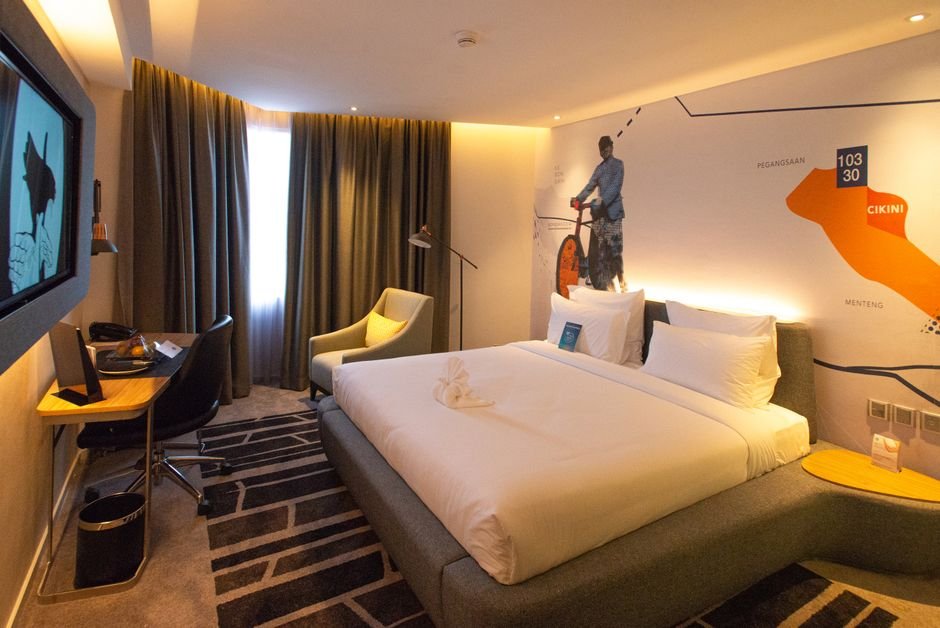
Look at the edges of the frame. If furniture near the sides looks stretched or leans outward, or if a standard double bed seems oddly long, the lens is doing heavy lifting. Straight lines that curve slightly near the corners are another giveaway. A room where the bed appears to fill barely a third of the floor usually has far less space around it in person.
Ceiling height gets the same treatment. Shots taken from low down, close to the floor, make ceilings look taller and rooms feel grander.
Checking misleading hotel listing photos against other sources
The fastest way to calibrate is to compare the official gallery with pictures that weren’t staged. A few checks worth doing:
- Guest photos on review sites. They’re usually taken on a phone at normal height, which gives you a truer sense of scale. Pair this with knowing how to tell legitimate travel reviews from fake ones, since the text around those photos matters too.
- The listed room size. If the listing gives square meters or square feet, compare it with a room you know well at home. Numbers don’t use lenses.
- Room type labels. A gallery may show the suite while you’re booking the standard room. Check that the photos are tagged to the category you’re paying for.
- Street-level map imagery. It shows what’s outside, which the listing’s exterior shot may have cropped away: a construction site, a busy road, or a view that’s mostly a neighboring wall.
What the photos leave out
What’s missing often tells you more than what’s shown. A gallery with ten pool shots and a single tight photo of the bedroom is making a choice. So is one with no bathroom picture at all, or a “sea view” photo taken from the rooftop bar rather than a guest room.
Watch for photos that look years older than the rest, with dated décor or a different color palette. Renovations sometimes cover only part of a building, and the listing may lead with the updated floor.
If something matters to you, such as a desk you can work at, a window that opens, or space for two suitcases, message the property before booking and ask directly. A specific question tends to get a specific answer, and you’ll have it in writing if the room doesn’t match.
When a listing does cross the line into false advertising, consumer protection agencies like the U.S. Federal Trade Commission explain how to report it. Before it gets to that point, build your plans so one disappointing room doesn’t sink the trip; a complete travel itinerary leaves room to change hotels if you need to.
Book the room the evidence shows you, not the one the lens suggests.