How to Choose a Dog Harness That Fits Right
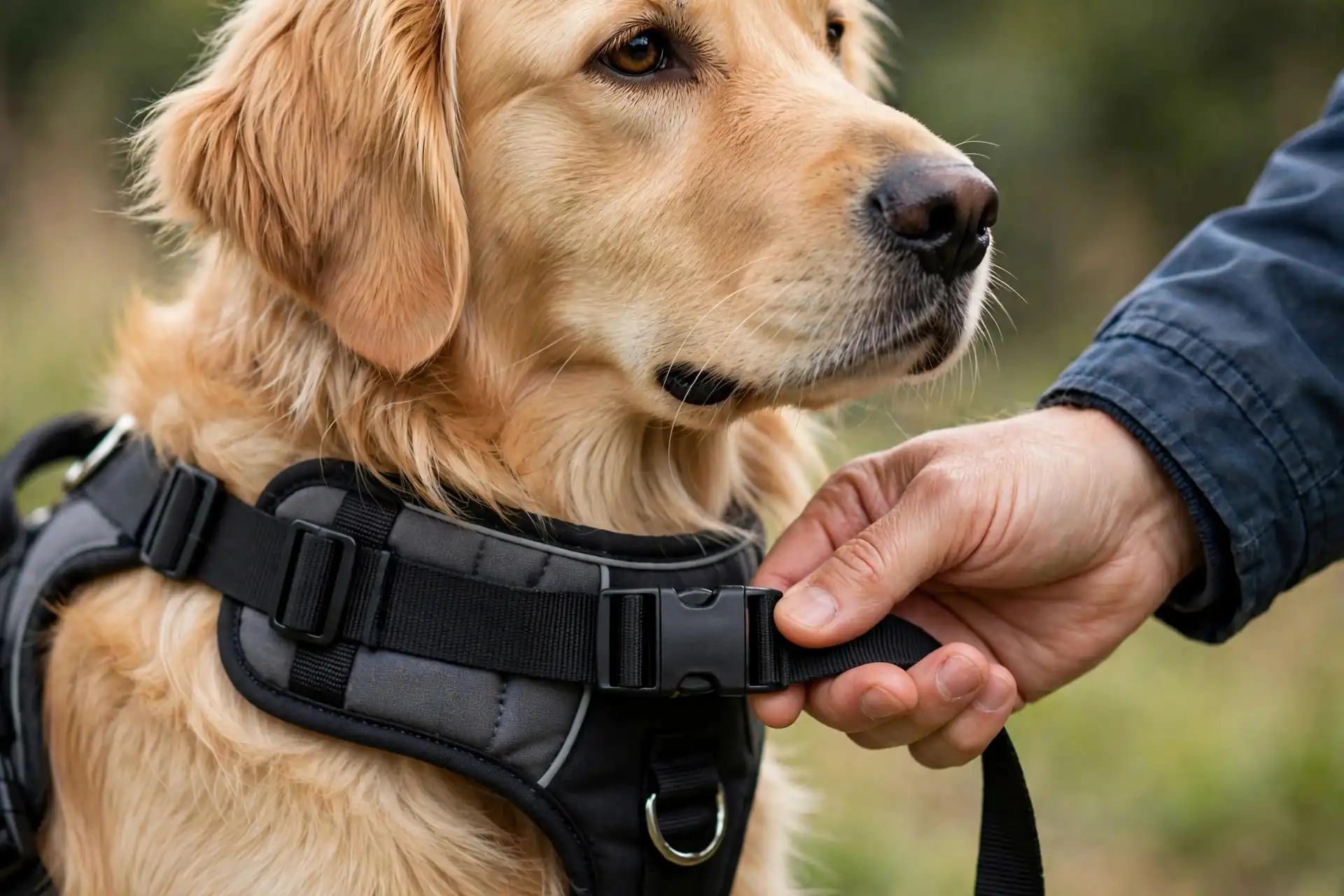
A harness that fits right sits flat against your dog’s body with no twisted straps, and you should be able to slide two fingers — but not a whole hand — under any strap while your dog stands normally. Getting there takes more than matching a size chart to a breed name.
Why a Size Chart Alone Falls Short
Breed-based charts assume an average build, but chest shape varies enormously even within a breed. A greyhound and a bulldog can weigh the same and still need very different harness proportions, since one has a narrow, deep chest and the other a wide, barrel-shaped one. Measure your dog’s chest girth just behind the front legs and the base of the neck with a soft tape, then check those numbers against the brand’s own measurement chart rather than its “small, medium, large” labels, which vary between manufacturers and rarely line up with each other.
It helps to measure twice, a day or two apart, since a dog that just ate or is standing tensed up can read an inch bigger than its resting size. If your dog falls between two chart sizes, size up rather than down — a strap you can tighten further is a quick fix, while one that’s already maxed out and still loose means returning the harness entirely.
What to Check Once It’s On
Buckle the harness and walk your dog around the room before deciding it fits.
- Slide two fingers under each strap — snug enough to stay put, loose enough not to pinch
- Check the chest plate for gaping a dog could back out of during a startle
- Watch the leg openings for rubbing against the armpits after a few minutes of walking
- Make sure the back D-ring sits high enough that leash pressure doesn’t pull the harness sideways
- On front-clip styles, confirm the strap crosses the chest rather than the windpipe
A dog that suddenly stops mid-walk to bite at a strap, or seems to shy away from a spot on its body, is telling you something is rubbing or pinching even if you can’t see it right away. Watch the first few walks closely rather than assuming a good fit at the store means a good fit outside.
Material and Hardware Matter Too
Nylon webbing is the standard for a reason: it’s affordable, dries quickly, and holds up to regular washing. For a dog that swims often or lives somewhere humid, look for coated webbing and stainless or solid-brass hardware rather than plated metal, which can corrode and stiffen with time. Stitching should run in a box-and-X pattern at every stress point, not a single straight line, since that’s exactly where a harness fails under a hard pull.
Padding matters more than it looks like it would. A thin strap distributes a dog’s pulling force across a much smaller area of skin, which is why lightly padded harnesses tend to hold up better for dogs that pull hard or walk for long stretches, even if the unpadded version looked identical on the shelf.
For general guidance on everyday dog gear and care, ASPCA’s dog care resources are a reasonable place to start if you’re outfitting a new dog for the first time.
A harness that fit perfectly at twelve weeks old won’t fit at eight months. Recheck it every few weeks during a growth spurt instead of assuming one purchase will last the whole first year.
Why harness fit matters more than harness style
A harness in the wrong size can cause more problems than no harness at all. Too loose and the dog slips out, often at the worst moment. Too tight and it chafes, restricts movement, or presses on the throat it was meant to protect. The style of harness matters less than whether it fits the individual dog’s body, which is why fitting deserves more attention than brand or design.
Dogs come in shapes that defy standard sizing. Deep chested breeds, barrel bodied breeds, and dogs between sizes all need careful fitting rather than a guess based on weight alone. Greyhounds and bulldogs can weigh nearly the same yet need completely different harness shapes. Weight ranges on packaging are rough guides at best; two dogs of the same weight can have completely different chest depths and neck sizes.
Measure before you shop
Take three measurements with a soft tape: around the neck where a collar would sit, around the widest part of the chest just behind the front legs, and the distance from neck to chest along the top. Write them down and compare against the manufacturer’s size chart, not against your dog’s usual collar size. Harness sizing is its own system.
If your dog falls between sizes, the general rule is to size up and adjust down, since most harnesses adjust smaller more easily than they stretch larger. But check the adjustment range: a harness sized up that cannot tighten enough for your dog’s chest is as useless as one that is too small. Our guide to slip leads versus regular collars covers the collar side of the walking equipment question.
The two finger test and pressure points
With the harness on, you should be able to slide two fingers flat between the harness and the dog at every contact point. Less than that and it is too tight; much more and it is too loose. Pay special attention to the armpit area, where chafing most commonly develops, and to the front of the chest, where a too tight harness restricts shoulder movement.
Watch the dog move. The harness should not shift significantly when the dog walks, turns or shakes. Front clip harnesses should not pull sideways across the chest. Back clip attachments should sit over the shoulders, not slide toward the neck. Have the dog walk, trot and sit while you observe; problems that are invisible when the dog stands still often appear in motion. A harness that looks perfect on a standing dog may ride up into the armpits the moment the dog starts trotting, so never skip the movement check.
Signs the fit is wrong
Chafing or hair loss under straps, the dog chewing at the harness, reluctance to walk that disappears when the harness comes off, the harness rotating around the body, or escape incidents are all fit problems. Do not assume the dog will get used to a poorly fitting harness; discomfort does not resolve with familiarity.
Front clip, back clip, or dual
Attachment point affects both control and comfort. Back clip harnesses are comfortable and simple, good for calm dogs that do not pull. Front clip harnesses give more steering control for pullers by redirecting forward momentum sideways, but the front strap can interfere with natural gait if poorly fitted. Dual clip harnesses offer both options and are worth the small premium for versatility.
For strong pullers, no harness alone solves the problem; training is still required. A front clip harness is a management tool that makes training easier, not a substitute for it. Think of it as training wheels: useful while learning, not a permanent replacement for the skill itself. Avoid harnesses marketed as no pull that work by restricting shoulder movement, since these can alter gait and cause discomfort over time.
Fitting puppies and growing dogs
Puppies outgrow harnesses fast, which tempts owners to buy large and let the puppy grow into it. A too large harness on a puppy is a safety risk, since puppies are the most likely to slip equipment and bolt. Buy for the current size with room to adjust, and budget for replacements during growth. Most puppies need at least two harness sizes before reaching adulthood, so buying the cheapest adjustable option for the early months is perfectly sensible. Check the fit every couple of weeks during rapid growth phases.
Introduce the harness positively from the start. Let the puppy sniff it, treat for interaction, and keep early wearing sessions short and fun. A puppy that learns the harness predicts walks will accept fitting adjustments without fuss. The American Kennel Club’s harness fitting guide includes helpful visuals for the adjustment points on common harness styles. For everyday walking choices, see also our guide to dog body language warning signs so you can read your dog’s comfort level with any equipment.
Frequently Asked Questions
Should I measure my dog or go by weight?
Always measure. Weight ranges are approximate and two dogs of the same weight can need different sizes. Chest and neck measurements matched to the size chart give a far more reliable fit.
How tight should a dog harness be?
Snug enough that it does not shift or rotate, loose enough to slide two flat fingers under every strap. It should never restrict breathing, press on the throat, or chafe behind the legs.
Can a harness damage my dog’s shoulders?
A poorly fitted harness, particularly some no pull designs that cross the shoulders restrictively, can affect gait over time. A well fitted harness with straps positioned behind the shoulders allows full natural movement.
Is a front clip or back clip better?
Back clips suit calm dogs and everyday comfort. Front clips give better control for dogs that pull. Dual clip harnesses offer both and are the most versatile choice if you are unsure.
How often should I check the fit?
Check every few weeks for puppies, after any significant weight change, and seasonally for adult dogs since coat thickness affects fit. Also recheck whenever you notice chafing, shifting, or reluctance to walk.
Conclusion
A well fitted harness keeps your dog secure, comfortable and happy to walk. Measure carefully, test in motion, and recheck regularly as your dog grows or changes. For more dog gear and care guides, visit the Factblaze homepage.