Common Mistakes People Make With Cat Litter Box Placement
Where you put the litter box changes whether your cat uses it at all, and it matters more than the box itself, the litter brand, or how often you scoop. Most placement mistakes come from thinking about the box from a human’s point of view instead of a cat’s, choosing a spot that’s convenient to clean rather than one a cat actually feels safe using.
Putting It Somewhere Loud or Startling
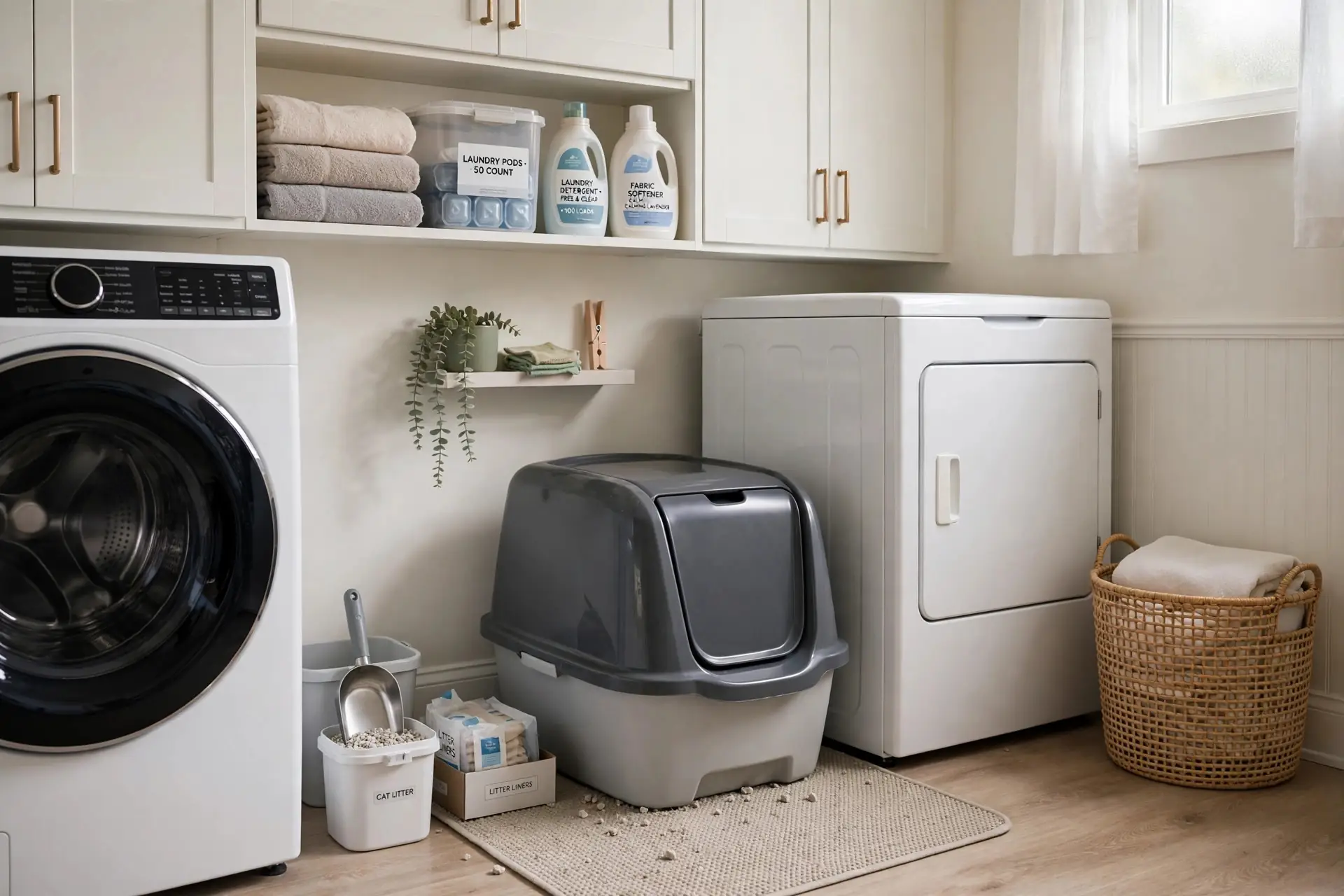
A box next to the washing machine, furnace, or a door that slams shut behind a cat mid-use teaches a cat to associate the box with a sudden noise it can’t predict or escape. Cats are vulnerable while eliminating, and a startle in that moment is often enough to make them avoid the spot entirely afterward, even once the noise itself is gone and the room is quiet again.
Crowding Boxes Together or Near Food and Water
Cats generally don’t want to eliminate near where they eat, so a box positioned right beside the food bowls works against their instincts from day one. In multi-cat households, lining boxes up side by side in one room doesn’t count as multiple options in a cat’s mind — if one cat can block access to all of them at once by simply sitting nearby, it’s effectively one box with extra steps rather than several real choices.
Making It Hard to Reach or Escape
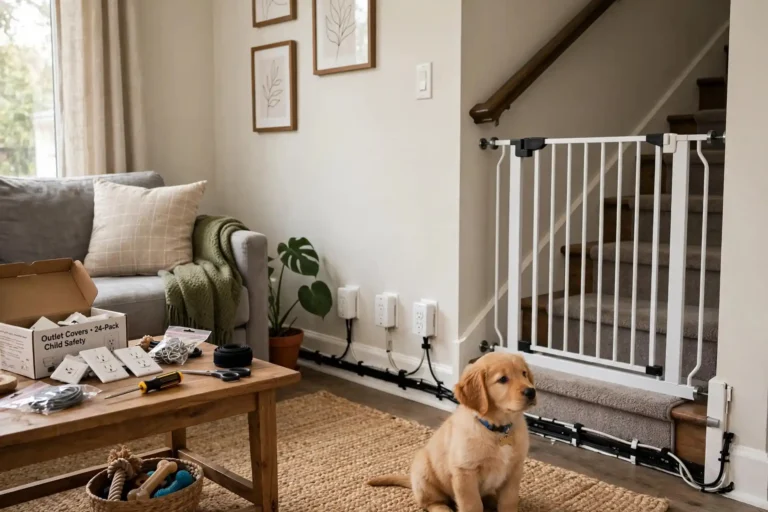
A box tucked in a basement corner, behind a closed door, or inside a covered hood with only one entrance limits how quickly a cat can get in and out. That matters most in homes with other pets: if a cat is adjusting to a resident dog, a box with no clear escape route can make the cat feel cornered every time it needs to use it, which is a fast way to end up with accidents elsewhere in the house instead of a resolved problem.
The Rule of Thumb for Multiple Cats
The standard guidance is one box per cat plus one extra, spread across genuinely different locations rather than clustered in a single room. A two-cat household does better with three boxes on different floors or in different rooms than with three boxes lined up against one wall. Spreading them out also means a temporary blockage, cleaning day, or one cat guarding a spot doesn’t leave the whole household without an option.
International Cat Care’s advice library covers litter box setup in more depth if you’re troubleshooting a specific household.
If a cat suddenly stops using a box it relied on reliably for months, check placement before assuming it’s spite or stubbornness. It almost never is — something about the location, the traffic around it, or another pet’s access has usually changed first.
Litter box problems are the number one reason cats are surrendered to shelters — and most of the time, the cat isn’t the problem. The box is. Cats are particular about where they relieve themselves in ways that made perfect sense for their wild ancestors and still govern their behavior today. Get the placement wrong and a perfectly litter-trained cat will start going elsewhere. The good news: placement mistakes are among the easiest cat problems to fix.
Mistake 1: Putting the Box Where It’s Convenient for You
The classic error is treating the litter box like a piece of furniture to be hidden: the far corner of the basement, the laundry room behind the dryer, the garage. These spots are convenient for humans and miserable for cats. A box in a remote, rarely visited part of the house feels unsafe to a cat — it’s far from the family’s core territory, often cold, and sometimes hard to reach.
Cats want their toilet near their living space but not in the middle of it — the same way you’d want a bathroom near your bedroom but not in your kitchen. A quiet corner of a room the family actually uses, a spare bathroom, or a low-traffic hallway nook all work better than the basement dungeon. The cat should be able to reach the box easily at all hours without crossing scary territory.
Mistake 2: Placing It Next to Food and Water
Cats have a strong instinct against eliminating near where they eat — in the wild, that contaminates the food source. A litter box jammed next to the food bowls creates a genuine conflict for the cat, and it’s one of the most common reasons cats start avoiding the box entirely. Keep food, water, and litter in separate areas, ideally separate rooms.
This matters even more in small apartments where everything ends up in one room. If space is tight, maximize the distance — opposite corners at minimum — and use furniture or a screen as a visual divider. The cat needs to feel that the toilet zone and the dining zone are different places.
Mistake 3: The Noisy Appliance Zone
The laundry room is the most common bad location in American homes, and the reason is the appliances. Washing machines and dryers produce sudden loud noises, vibration, and unpredictable cycles. A cat mid-squat when the spin cycle kicks in learns a lasting lesson: the box is a scary place. Furnaces, water heaters, and loud HVAC vents create the same problem.
Think about it from the cat’s perspective: elimination is a vulnerable moment. In the wild, a cat is exposed while it goes, so it needs to feel safe. A location with random loud bangs is the opposite of safe. If the only available spot is near appliances, at least choose the quietest corner and consider whether a different room is truly impossible.
Mistake 4: Dead Ends and Ambush Spots
In multi-cat homes, box location is about social dynamics as much as convenience. A box tucked into a dead-end corner — under the stairs, at the end of a narrow hallway — gives a nervous cat no escape route. A more confident cat can guard the approach and effectively block the other cat from using the box. The blocked cat then finds somewhere else to go, and the owner blames the victim.
Every box should have at least two exit paths, or sit in open space where the cat can see approaches. Avoid placing boxes where one cat must pass another cat’s favorite sleeping spot to reach them. In multi-cat homes, the standard guidance is one box per cat plus one extra, spread across different areas — not lined up in a row in the same room, which cats treat as one big box. The American Association of Feline Practitioners publishes detailed environmental needs guidelines that cover exactly this kind of resource placement.
The Covered Box Complication
Covered boxes concentrate the escape-route problem: one door in, one door out, and the cat can’t see what’s coming. Many cats tolerate them, but nervous or bullied cats often don’t. If you’re using covered boxes in a multi-cat home and having problems, removing the lids is one of the cheapest experiments you can run. Odor control is a human concern; the cat’s security comes first.
Mistake 5: Too Few Boxes in a Multi-Level Home
A single box on the ground floor is a long journey for a cat that spends its day upstairs — especially for kittens, seniors, or cats with mobility issues. A senior cat with arthritis may simply be unable to manage the stairs in time. The result looks like a behavior problem; it’s actually an accessibility problem.
Put a box on each floor the cat uses. For senior or arthritic cats, add a low-entry box (or cut a lower doorway in a storage tote) so stepping in doesn’t hurt. If a cat that was reliably trained starts missing the box, ask first whether reaching it has become difficult before assuming anything behavioral. And as always, persistent changes in litter habits deserve a vet check — urinary issues are common and painful, and the cat may be associating the box with pain.
Mistake 6: High-Traffic Hallways and Startling Spots
The opposite of the remote basement is the box in the middle of everything: next to the front door, in a hallway kids thunder through, beside the dog’s bed. A cat that gets startled mid-use a few times will look for a quieter alternative — behind the sofa, in a closet, in the laundry basket. Privacy matters.
Children and dogs are the usual culprits. A toddler who treats the litter box as a fascinating discovery, or a dog that snacks from it, will drive any cat away. Baby gates with cat-sized pass-throughs, or simply a room the dog can’t enter, solve both problems. The box needs to be a place the cat can use without interruption, every single time.
Reading Your Cat’s Feedback
Cats tell you when the location is wrong; you just have to interpret the review. Scratching around the box without using it, perching on the edge, rushing out immediately after, or eliminating just outside the box are all location complaints. So is a cat that uses the box but seems tense — crouched, ears back, bolting afterward. A comfortable cat uses the box calmly and covers (or doesn’t) without drama.
These signals pair with the rest of feline body language. Reading a cat’s tail position around the box — a low or tucked tail on approach means the cat is already uneasy — helps you distinguish a location problem from a medical one. And remember that a cat’s relationship with its territory runs deep: the whole question of indoor versus outdoor cats turns on how cats experience their space, and the litter box is a core piece of that indoor territory.
Frequently Asked Questions
How many litter boxes do I need?
The standard rule is one per cat plus one extra. So two cats need three boxes. They should be in different locations — boxes side by side count as one in a cat’s mind.
Can I put the litter box in the bathroom?
Yes — bathrooms are often ideal: easy-clean floors, privacy, and ventilation. Just make sure the door stays open (a doorstop or propped door) and the box isn’t next to a loud exhaust fan that startles the cat.
My cat goes right next to the box. What’s wrong?
Going beside the box usually means the cat wants to use it but something’s off — the box may be too small, too dirty, too smelly (scented litter bothers many cats), or the location feels unsafe. It’s also a classic sign of a urinary issue, so if it’s new behavior, call your vet.
Are covered or uncovered boxes better?
Most behaviorists prefer uncovered: better ventilation, better visibility, more escape routes. Covered boxes serve human odor concerns more than feline ones. If odor is the issue, scoop more often rather than adding a lid.
How often should I scoop?
At least once daily; twice is better. Cats are fastidious, and a dirty box is one of the top reasons cats go elsewhere. Full litter changes and box washing (mild soap, no strong disinfectants) should happen every couple of weeks.
Conclusion
Almost every litter box placement problem comes down to the same insight: the box has to work for the cat, not for the furniture layout. Quiet, accessible, away from food, away from noise, with an escape route — get those five things right and most “behavior problems” disappear on their own. For more on living well with cats, explore Factblaze, and give your cat’s bathroom the same thought you’d give your own.