Common Mistakes People Make Exchanging Currency Abroad
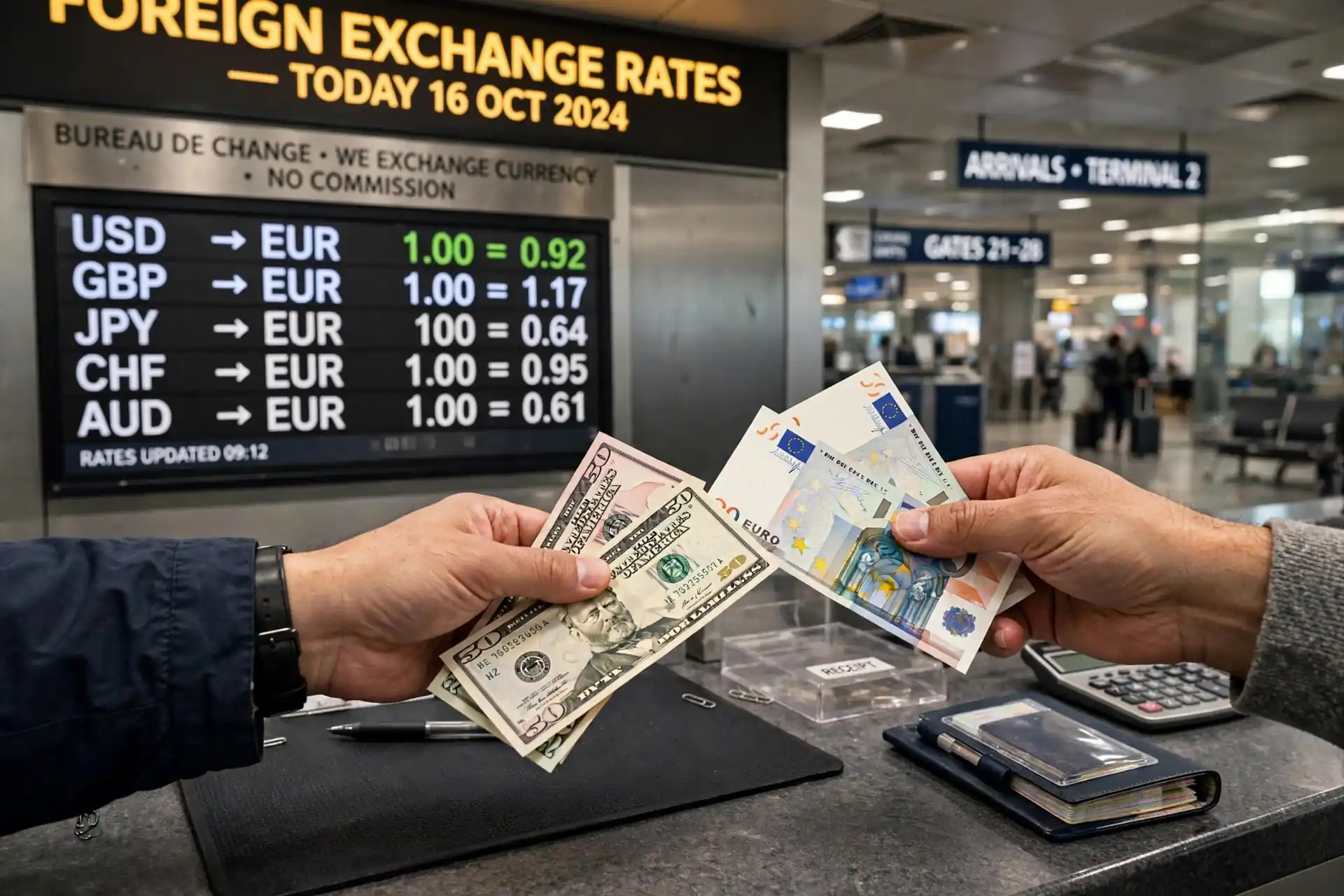
The worst currency exchange rates hide in the most convenient places — the airport kiosk right after you land, the hotel front desk, the “0% commission” sign on a busy tourist street. Convenience and a fair rate rarely show up in the same spot, and knowing that alone avoids most of the damage.
Exchanging at the Airport or Hotel
Airport counters and hotel desks charge for being the only option in the building, and the markup is usually steep — sometimes 10–15% worse than the mid-market rate available elsewhere. If you land with zero local cash, get enough for a taxi and a meal at the airport and handle the rest later, rather than changing your whole trip’s budget the moment you land.
Trusting a “Zero Commission” Sign
A shop advertising no commission isn’t giving away free money — it’s baking its margin into the exchange rate itself, which is worse for you and harder to spot than a flat fee would be. Compare the number on the board to the mid-market rate, a quick search on your phone, before handing over cash; a gap of more than a few percent means the “no fee” sign is doing exactly what it looks like it’s avoiding.
Ignoring What’s Already in Your Wallet
Many debit and credit cards now waive foreign transaction fees and apply the real mid-market rate automatically, which usually beats any cash exchange by a wide margin. Withdrawing local currency from an ATM tied to a fee-free card, in reasonable amounts rather than one large withdrawal, is often the cheapest option available — check your bank’s foreign ATM fee policy before you leave, since some reimburse it and some don’t.
Falling for “Dynamic Currency Conversion”
When a card machine or ATM abroad asks whether to charge you in your home currency or the local one, choose the local currency every time. The home-currency option, known as dynamic currency conversion, applies its own inflated exchange rate at the point of sale, and it’s designed to sound like a convenience while quietly costing more.
Check the rate with a currency converter before exchanging anything in person, so you have a number to measure the counter’s offer against. And if the trip involves enough cash and cards to track for two weeks away, spreading your currency across a couple of payment methods limits how much any single bad exchange costs you.
None of this takes more than a five-second phone check — the expensive habit is handing over cash without comparing it to anything at all.
You know the headline mistakes already: airport kiosks with terrible rates, exchanging at the hotel desk, accepting the first offer. What trips people up next is the layer underneath, the quieter decisions that each cost a few percent here and a fee there until the total damage is real. These are the mistakes that happen after you have already decided to be careful, and they are worth understanding before your next trip.
The Rate You See Is Not the Rate You Get
Currency exchange has two numbers that matter and only one of them is advertised. The mid-market rate is the real exchange rate banks use with each other; it is the number you see on Google when you search a conversion. The rate any bureau offers you is the mid-market rate minus their margin, and that margin is where they make their money. A bureau advertising “0% commission” can still take five or six percent through the rate alone.
Before you exchange anything, check the mid-market rate on your phone so you know the benchmark. Then compare the offered rate against it. A gap of one to two percent is reasonable for a retail exchange; anything beyond three percent deserves a second look elsewhere. This single habit, comparing against the real rate instead of against other tourist-facing offers, saves more money than any other trick in this guide.
Watch out for the commission sleight of hand too. Some places charge no commission but widen the rate margin; others offer a tight rate and add a flat fee. Neither is automatically better. Do the full math on the amount you are actually exchanging: rate times amount, minus any fee, and compare the final number across options.
Exchanging Too Much, Too Early, or Too Late
Timing and sizing your exchanges matter as much as where you do them. Exchanging a large sum at the airport on arrival, out of anxiety about being cashless, is one of the most expensive things a traveler can do, because arrival-zone bureaus know you have no alternatives yet and price accordingly. Get only what you need for the first day, then exchange the rest in the city where competition drives better rates.
The opposite mistake is exchanging your entire trip’s cash at home before you leave. Home banks often offer poor rates on foreign currency and may charge ordering fees, and carrying two weeks of cash is a security risk as well as a budgeting one. A middle path works best: a small amount of local currency before departure for arrival costs, then local exchanges or ATM withdrawals for the rest.
Do not forget the return trip either. Leftover foreign currency converted back to your home currency gets hit with the margin twice, once in each direction. Spend down sensibly toward the end of the trip, and check whether your bank accepts foreign currency deposits; some do at better rates than a bureau’s buy-back. This pairs with the discipline of estimating a daily travel budget, which keeps both your spending and your exchange amounts in realistic territory.
ATM Mistakes That Quietly Cost You
ATMs abroad are often the best exchange option available, but only if you use them correctly. The biggest ATM trap is dynamic currency conversion: the machine offers to charge you in your home currency “for convenience.” Always decline and choose the local currency. The conversion rate the ATM’s provider applies is consistently worse than what your own bank will apply, sometimes by five percent or more.
Use bank-affiliated ATMs rather than standalone machines in tourist areas, which tend to add their own fees on top of everything else. And check your home bank’s foreign ATM policy before you leave: some banks charge a flat fee plus a percentage per withdrawal, which makes many small withdrawals expensive, while others reimburse fees entirely. Knowing your bank’s terms changes how you should withdraw.
Withdraw in reasonable amounts rather than tiny ones to spread any flat fee across more cash, but balance that against the risk of carrying too much. Two or three well-sized withdrawals per week is a sensible rhythm for most trips. If your bank partners with international ATM networks, look those up in advance; fee-free partner ATMs are common and underused.
Card Fees You Did Not Know You Were Paying
Credit and debit cards are convenient abroad, but the fee structures hide in the fine print. Foreign transaction fees, typically around three percent, apply to every purchase on many cards, and they are easy to miss because they are baked into the converted total rather than listed separately. Over a two-week trip, that three percent adds up to real money.
The fix is to travel with at least one card that charges no foreign transaction fee. These are widely available and often come with no annual fee, so there is little reason to pay the surcharge anymore. Just confirm the no-fee terms in writing before the trip; marketing language can be slippery about what “no foreign fees” covers.
Be careful with cash advances on credit cards abroad, which trigger immediate interest at high rates plus a cash advance fee. And when a merchant abroad offers to charge your card in your home currency instead of the local one, the same dynamic-currency-conversion trap from ATMs applies: always choose the local currency. The U.S. Consumer Financial Protection Bureau’s resources at consumerfinance.gov explain these fee structures in plain language if you want to understand exactly what your card agreements allow.
The Leftover Cash and Receipt Problem
Small organizational mistakes compound at the currency exchange counter. Mixing currencies in one wallet makes it hard to track what you have and leads to paying in the wrong bills. Keep currencies separated, even if it is just different pockets or envelopes, and know roughly how much local cash you are carrying at any point.
Keep exchange receipts until you are home. Some countries require proof of legal exchange for converting currency back at departure, and receipts are your only evidence of the rate you received if there is a dispute. They also help you track your actual spending against your budget, which is hard to do from memory across two currencies.
Finally, have a plan for coins and small bills, which bureaus and banks generally will not convert back. Spend them down in the last days on transit, tips, snacks, and small souvenirs. It is a small thing, but a pocket of unusable foreign coins is the most common souvenir nobody wanted. Getting the paperwork side of travel right starts earlier too; see our guide to finding official visa information for the documents side of trip preparation.
How Much Cash to Actually Carry Abroad (and Where to Keep It)
Most travelers carry either far too much or far too little cash. The right amount depends on where you are, but a simple rule covers most trips: carry what you expect to spend in two days, and no more.
For a mid-range traveler in Europe or Southeast Asia, that means roughly $60 to $100 a day in local currency, so $120 to $200 in your wallet. That covers taxis, market stalls, tips, and small restaurants that only take cash. In cash-heavy countries like Japan or Morocco, push it to three days’ worth.
Never keep it all in one place. Split your stash three ways: your daily spending money in your wallet, a backup stash in a separate pocket or a money belt, and an emergency reserve in the hotel safe — about two days’ spending money. If your wallet gets lost or stolen, the other two stashes keep you functional.
Use the hotel safe for the bulk of your cash and take out only what you need each morning. Most hotel safes are good enough to protect against opportunistic theft, which is the real risk in tourist areas. Just remember to clear it out before checkout — forgotten cash in hotel safes is one of the most common lost-item complaints worldwide.
One last rule: keep a $50 bill from your home currency tucked somewhere separate. In a genuine emergency, it is accepted almost everywhere.
Frequently Asked Questions
Is it better to exchange currency before I travel or after I arrive?
A hybrid approach works best: get a small amount before departure for arrival expenses like transit and tips, then exchange or withdraw the rest at your destination where competition produces better rates. Exchanging everything at home usually means worse rates and more cash to carry.
What is dynamic currency conversion and why should I avoid it?
It is when an ATM or merchant offers to process your transaction in your home currency instead of the local one. The exchange rate applied is set by their provider and is consistently worse than your own bank’s rate. Always choose to be charged in the local currency.
Are airport currency exchanges always a bad deal?
Not always, but usually. Arrival-zone bureaus face little competition and price accordingly. They are fine for a small emergency amount, but exchange the bulk of your money in the city or use a bank ATM instead.
Should I use cash or card abroad?
Use both. Cards with no foreign transaction fee are best for larger purchases and give you a spending record; cash is essential for small vendors, transit, tips, and places that do not take cards. Relying entirely on one or the other leaves you exposed.
What should I do with leftover foreign currency?
Spend down coins and small bills before departure since they cannot be converted back. For leftover notes, compare your bank’s buy-back rate against a bureau’s, and keep your exchange receipts in case proof of legal exchange is required.
Conclusion
Currency exchange mistakes are rarely dramatic; they are a slow leak of a percent here and a fee there. Close the leak by comparing every offer against the mid-market rate, declining dynamic currency conversion, using a no-foreign-fee card, and planning your cash needs instead of exchanging in a panic. The money you save is your spending money. For more practical travel money guidance, Factblaze covers budgeting, planning, and the logistics of travel in plain language.