What Enrichment Toys Do for a Bored Dog
Enrichment toys give a bored dog a job to do, and that mental work tires a dog out in ways a walk alone often can’t. A dog that’s pacing, chewing furniture, or barking at nothing isn’t always under-exercised — it’s frequently under-stimulated, and enrichment toys for dogs address a different need than physical exercise does.
Why Mental Work Tires Dogs Out Differently
Problem-solving, sniffing, and foraging use a dog’s brain in ways a straight walk down the sidewalk doesn’t. Working dog breeds especially were bred to have a task, and without one, that drive shows up as destructive or anxious behavior instead. Fifteen minutes of working a puzzle feeder for a meal can leave a dog as settled afterward as a much longer walk, simply because the effort is concentrated rather than spread across a low-intensity stroll.
Types of Enrichment Toys for Dogs and What Each One Targets
Different toys target different instincts, and rotating between them keeps any single one from losing its novelty:
- Puzzle feeders — turn mealtime into a problem to solve instead of a thirty-second event.
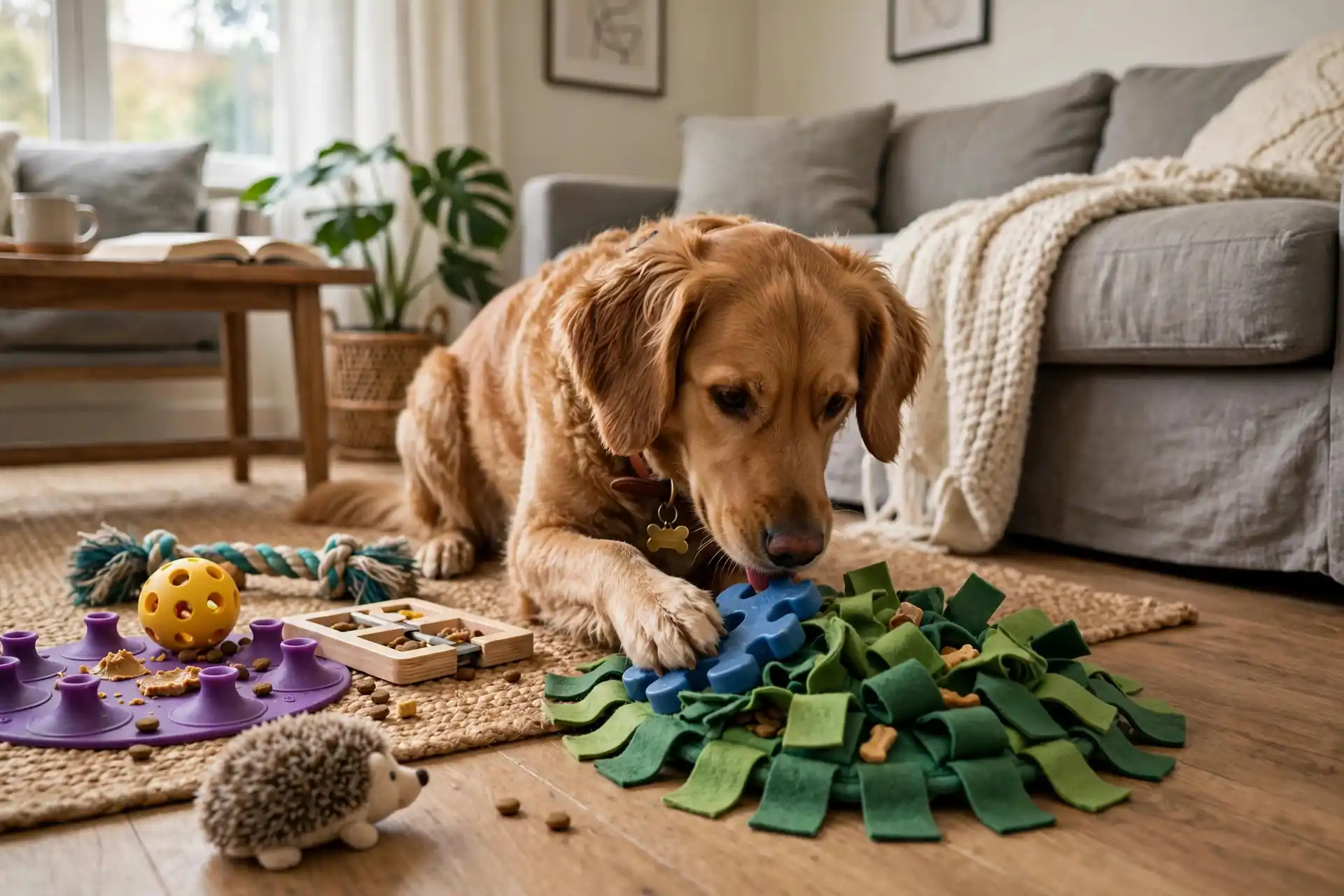
- Snuffle mats — tap into scent-driven foraging, which is mentally tiring in a way sight-based play isn’t.
- Frozen stuffed toys — slow down a dog that eats or chews too fast and extend engagement time.
- Tug and flirt-pole toys — channel chase and grip instincts through supervised play rather than furniture or shoes.
If tug or flirt-pole sessions move outdoors, a properly fitted harness makes the play safer for a dog that’s lunging and pivoting rather than walking in a straight line.
Rotating two or three toys in and out of use, rather than leaving everything out all the time, keeps each one feeling new. A toy that’s been on the floor for a month stops registering as interesting, the same way a familiar walk route stops holding a dog’s attention after enough repetition.
Enrichment Isn’t a Replacement for Everything Else
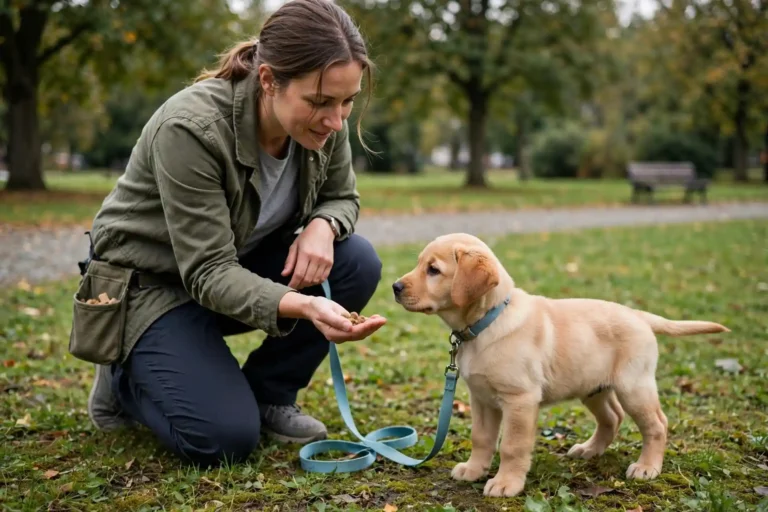
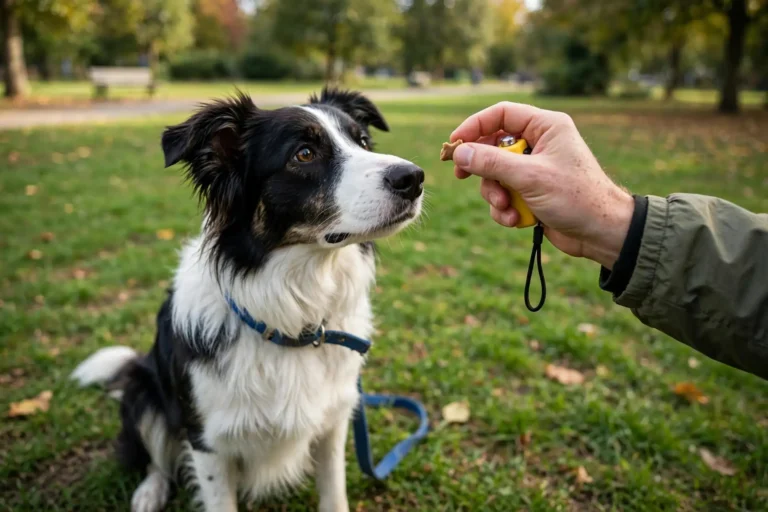
Toys help most alongside the basics — regular walks, safe off-leash time where available, and reward-based training sessions, which double as mental enrichment on their own. A bored, understimulated dog often improves faster with a mix of short training sessions and puzzle-style feeding than with a pile of new toys alone. If boredom behaviors continue despite consistent enrichment and exercise, it’s worth ruling out anxiety or a medical cause with a vet rather than assuming more toys will fix it. The ASPCA’s pet care resources cover enrichment basics for dogs that are still settling into a routine, and they’re a reasonable starting point if you’re building one from scratch.
You already know the core idea: a bored dog is a destructive dog, and enrichment toys give that restless energy somewhere productive to go. What is less obvious is what is actually happening in your dog’s head when they work a puzzle feeder or shred a snuffle mat, and why it matters beyond keeping your shoes intact. Enrichment is not just entertainment; it is closer to a psychological need, and understanding the mechanics helps you choose the right toys instead of just buying more of them.
Boredom in Dogs Is a Real Behavioral Problem
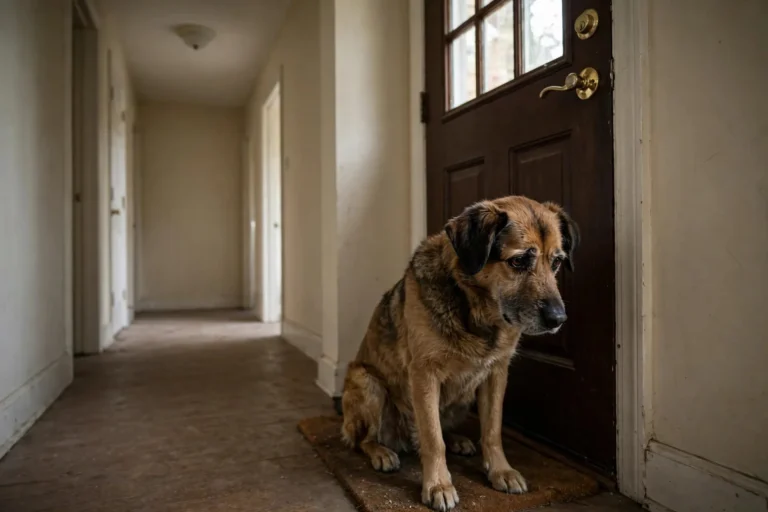
Dogs were bred for jobs: herding, hunting, guarding, retrieving. A pet dog with no job and eight alone hours a day has a brain built for work and nothing to work on. That mismatch is what produces the classic boredom behaviors: chewing furniture, digging at doors, excessive barking, pacing, and the frantic greeting that knocks over guests. These are not spite or bad training; they are a working animal inventing work.
Mental exercise tires a dog in a way physical exercise alone does not. A long walk exercises the body, but a dog that runs for an hour and still destroys the couch is telling you the body was not the problem. Trainers often observe that fifteen minutes of focused problem-solving leaves a dog calmer than an hour of fetch, because the brain work satisfies something the running does not.
This is also why boredom behaviors often look like anxiety behaviors, and the two get confused. If your dog only destroys things when left alone, the question of what separation anxiety in dogs looks like is worth reading, because true separation anxiety needs a different approach than boredom. Enrichment helps both, but it solves boredom far more completely.
How Puzzle and Food Toys Engage the Brain
The most effective enrichment toys make the dog work for food, which taps into something deep. Dogs are natural foragers and problem solvers; in the wild, their ancestors spent much of the day finding and extracting food. A puzzle feeder recreates a simplified version of that work, and the concentration it demands is exactly what a bored brain is missing.
Different toys engage different skills. Puzzle feeders with sliding compartments reward paw dexterity and persistence. Snuffle mats reward nose work, letting the dog “hunt” kibble through fabric strips, which is deeply satisfying for scent-driven breeds. Frozen Kongs combine licking, which has a calming effect, with the slow release of food. Lick mats work on the same calming principle for dogs that get overstimulated.
The key variable is difficulty. A puzzle the dog solves in thirty seconds is a snack dispenser, not enrichment. A puzzle the dog cannot solve at all is frustration, which creates its own behavior problems. Start easy so the dog learns the game, then increase difficulty gradually. Most good puzzle toys have adjustable difficulty for exactly this reason, and rotating between two or three toys keeps the novelty alive.
Chew Toys and the Need to Gnaw
Chewing is not a behavior problem; it is a biological need, especially in young dogs. Puppies chew because their mouths hurt and exploring the world with the mouth is how they learn. Adult dogs chew to relieve stress, clean their teeth, and occupy themselves. An enrichment strategy without appropriate chew outlets is incomplete.
The distinction that matters is between teething versus just chewing. Teething puppies need soft, soothing textures and cold items for sore gums. Adult power chewers need durable toys rated for their chew strength, because a toy that breaks into pieces is a choking and obstruction hazard. Match the toy to the dog’s age and chew intensity, not just to what looks fun.
Safety rules apply to all chew toys. Supervise with new toys until you know how the dog treats them, and remove toys that are breaking apart. Size the toy to the dog: too small is a swallowing risk. The ASPCA’s pet care guidance at aspca.org covers toy safety basics worth reviewing.
Enrichment Beyond Toys: The Full Picture
Toys are one category of enrichment, but animal behaviorists usually describe five: food-based, sensory, social, cognitive, and physical. A dog with great puzzle toys but no sniffing walks, no training games, and no social interaction is still under-enriched. The toys work best as part of a broader routine.
Sensory enrichment is free and powerful. A “sniff walk” where the dog sets the pace and sniffs everything can be more tiring than a brisk march, because the nose work engages the brain intensely. Novel scents, different walking routes, and safe new environments all count. Social enrichment means training sessions, play with other dogs, and interactive games with you; a game of hide-and-seek with treats is enrichment and bonding at once.
Rotate the toys rather than leaving them all out. A toy that appears twice a week stays interesting; a toy that sits in the corner for a month becomes furniture. Keep a small rotation box and swap items every few days. This costs nothing and noticeably extends each toy’s effective life.
Building an Enrichment Routine That Sticks
The mistake most owners make is treating enrichment as an occasional event rather than a routine. A bored dog does not need a spectacular Saturday; they need fifteen minutes of engagement every day. A frozen Kong every evening at the same time becomes something the dog looks forward to, and the anticipation itself is enriching.
Match the routine to your schedule’s gaps. If the dog is alone during work hours, the highest-value enrichment goes right before you leave: a stuffed Kong or a snuffle mat session that occupies the first hour of solitude, when restlessness peaks.
Watch your individual dog and adjust. Some dogs are food-motivated puzzle fanatics; others care more about sniffing and shredding. Some love a challenge; some give up and need encouragement. There is no universally perfect enrichment toy, only the right match for your dog’s temperament, and finding it is part of the fun.
When Enrichment Is Not Enough
Enrichment solves boredom, but not everything that looks like boredom is boredom. If your dog’s destructive behavior continues despite a solid enrichment routine, consider medical causes: pain, cognitive decline in seniors, or thyroid issues can all produce restlessness and behavior changes. A vet check is the right next step when enrichment does not move the needle.
True separation anxiety also needs more than toys. A dog in genuine panic when left alone may ignore even high-value food, which is a sign the problem is emotional rather than recreational. Desensitization training, and sometimes veterinary behavioral support, address the root cause in a way toys cannot.
Finally, be honest about exercise. Enrichment complements physical activity; it does not replace it. A high-energy breed getting twenty minutes of walking a day will be under-exercised no matter how many puzzle toys you buy. Match the breed’s needs first, then let enrichment handle the mental side.
DIY Enrichment Toys From Things You Already Own
You do not need to buy a puzzle feeder to tire out your dog’s brain. Your kitchen drawer and recycling bin already hold everything you need.
Start with the muffin-tin game. Drop a few treats into the cups of a muffin tin, cover each cup with a tennis ball or a crumpled piece of paper, and let your dog figure out how to uncover them. The first few times it takes about 30 seconds per cup; once your dog learns the trick, you can freeze a little peanut butter under the treats to add five or ten more minutes of work.
Next, try the towel roll-up. Lay a bath towel flat, scatter kibble across it, and roll it up tightly. Your dog has to unroll it nose-first to find the food. If your dog solves it too fast, tie the rolled towel into a loose knot — that adds a whole new level of difficulty without spending a dime.
For chewers and shredders, box puzzles are perfect. Place a treat inside a small box, put that box inside a bigger box, and close both loosely. Dogs that love to rip and tear get an outlet that doesn’t involve your couch cushions. Just remove any tape, staples, or shipping labels first, and supervise the first few sessions so your dog learns to find the treat rather than eat the cardboard.
Rotate these games through the week and your dog gets a new challenge every day.
Frequently Asked Questions
How long should my dog play with enrichment toys each day?
Aim for at least fifteen to thirty minutes of active enrichment daily, split across sessions. A morning puzzle feeder and an evening Kong or training game covers most dogs well. High-energy breeds may need more, and the right amount is whatever leaves your dog settled rather than restless.
Are puzzle toys safe to leave with my dog unsupervised?
It depends on the toy and the dog. Sturdy rubber food toys like Kongs are generally fine unsupervised once you know your dog does not destroy them. Puzzle toys with small removable parts should be supervised, at least until you are confident in how your dog interacts with them.
My dog solves every puzzle toy in minutes. What now?
Increase the difficulty: freeze stuffed toys, choose higher-level puzzles, or layer challenges by hiding the puzzle itself for the dog to find first. You can also make mealtime the puzzle by scattering kibble in the yard or using multiple feeders, which extends the work without buying new toys.
Can enrichment toys replace walks?
No. Mental enrichment and physical exercise serve different needs, and dogs require both. A good rule is that enrichment makes exercise more effective and exercise makes enrichment more effective; neither substitutes for the other.
At what age should I start enrichment with a puppy?
From the day they come home. Simple versions are best at first: kibble scattered in grass, a snuffle mat, a soft puppy Kong. Early enrichment builds problem-solving confidence and establishes the habit of independent play, which pays off enormously during adolescence.
Conclusion
Enrichment toys work because they give a dog’s brain the job it was built for: solving problems, foraging, chewing, and sniffing. A small daily routine of puzzle feeding, appropriate chew toys, and sensory variety prevents most boredom behaviors before they start, and it is one of the highest-return investments in your dog’s happiness. For more practical pet care guides, visit Factblaze and browse the pet section.