What Whisker Fatigue Actually Is
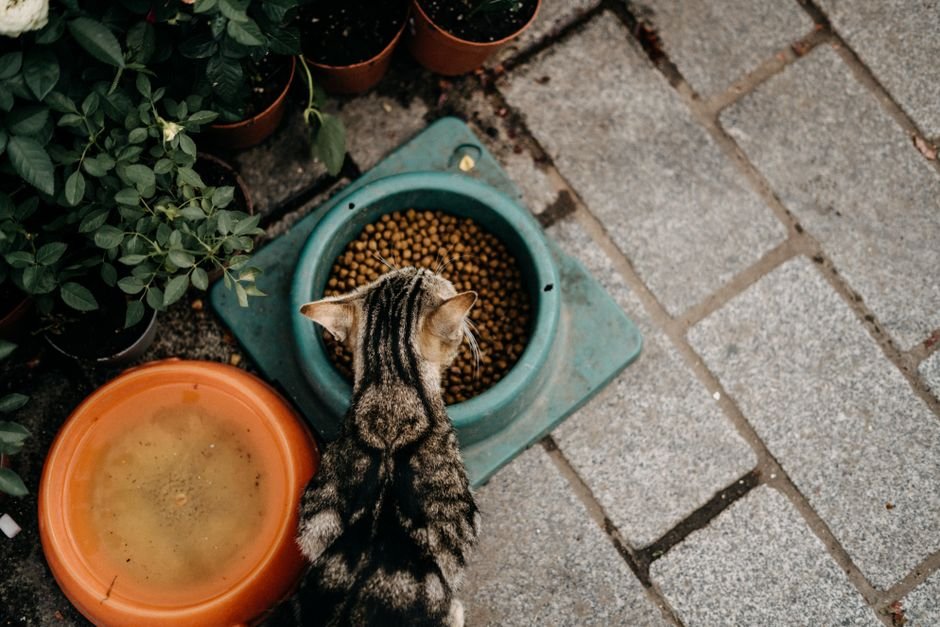
A cat that paws food out of a bowl onto the floor before eating it, or hovers over a water dish without drinking, isn’t necessarily picky. It may be dealing with whisker fatigue, a real sensory response to a bowl that’s too narrow or too deep.
Whiskers, or vibrissae, are packed with nerve endings and constantly feed a cat information about the space around its face. A deep, narrow bowl forces those whiskers to press against the sides every time a cat lowers its head to eat or drink, and that steady pressure is uncomfortable in a way that has nothing to do with the food itself.
The signs look like a behavior problem but aren’t
Cats showing whisker fatigue often paw food onto the floor and eat it from there, dip a paw into water instead of drinking directly, stand back from a full bowl, or seem to hesitate before approaching a feeding station they’ve used for months. It’s easy to mistake this for finickiness or read it as a sign of illness, when the fix is usually about the dish rather than the cat or the food.
Wide, shallow bowls or flat plates solve the problem because a cat’s whiskers never make contact with the sides while it eats. Ceramic and stainless steel dishes designed specifically as “whisker-friendly” have become common for exactly this reason, but a wide dinner plate works just as well and costs far less.
- Switch to a shallow, wide bowl or a flat plate instead of a deep one
- Watch whether a cat starts eating directly from the new dish within a few days
- Rule out other causes if the behavior doesn’t improve, since dental pain can look similar
- Keep water in a wide bowl too, not just food, since the same pressure applies there
Not every cat that paws at food has whisker fatigue, and it’s worth ruling out other explanations before assuming that’s the cause. Dental pain, nausea, or simple pickiness about food placement near a busy walkway can all produce similar behavior. A cat that’s still avoiding food after switching to a shallow dish, or that shows other changes like reduced appetite or weight loss, needs a vet visit rather than another bowl swap. The kind of careful observation described in how to tell if a cat is in pain is a useful habit here too, since discomfort at mealtime can show up in body language before it shows up as a change in eating.
Whisker trimming is never an appropriate response to this, and it’s worth saying plainly: a cat’s whiskers should never be cut or trimmed for any reason. They’re a working sensory organ, not decoration, and trimming them disorients a cat’s sense of space and distance in a way that causes far more harm than a deep food bowl ever would.
Most owners who make the switch to a shallow dish see a change within a few days, sometimes immediately. General cat care guidance from the ASPCA covers feeding setup as part of everyday wellbeing, and a shallow dish is one of the cheapest changes on that list. It’s a small fix for a problem that often gets misread as attitude.