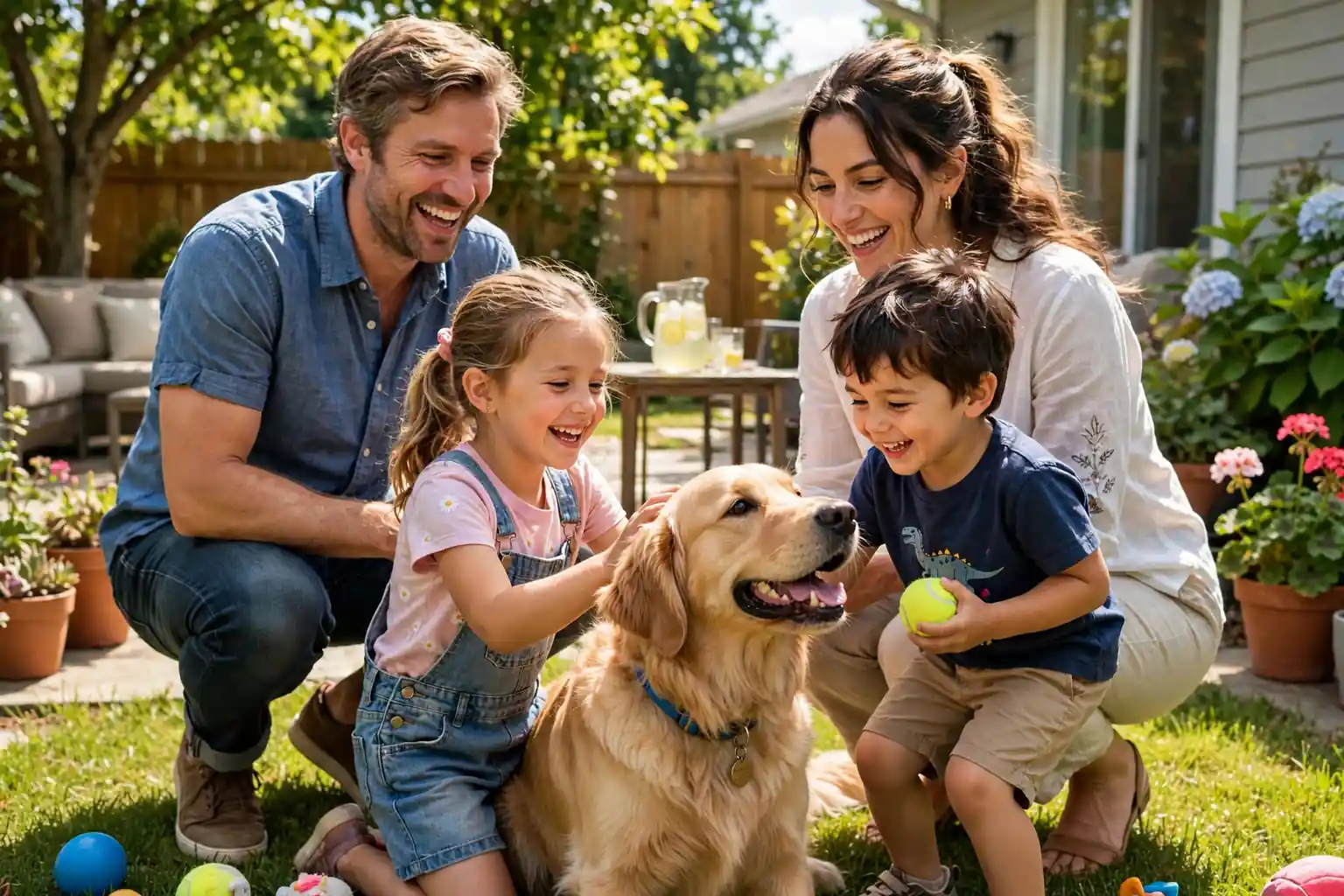
Best dog breeds for families
Choosing a family dog is one of those decisions that looks simple from the outside and reveals its complexity the moment you start actually researching it. Every list of “top family dogs” seems to agree on the same five or six breeds, and yet the reality is that the right dog depends almost entirely on factors specific to your household — the ages of your children, the size of your home, how active your family is, whether anyone has allergies, and how much time and money you can genuinely commit to an animal that will be part of your life for a decade or more.
This guide covers the best dog breeds for families across several categories — small, medium, large, and hypoallergenic along with honest information about what each breed actually requires. It also addresses the considerations that most “best family dog” articles skip: temperament variability within breeds, shedding realities, training expectations, and how to set both your children and your new dog up for a genuinely positive relationship.
What Makes a Dog Breed Good for Families
Before getting into specific breeds, it helps to understand what characteristics actually define a family-friendly dog rather than just repeating that certain breeds are “good with kids.” The qualities that matter most are:
Patience and tolerance. Family environments are unpredictable. Children are loud, fast-moving, and inconsistent in how they behave around animals. A dog that becomes anxious or defensive in that context is not a good fit, regardless of breed reputation.
Trainability. Dogs that respond well to positive reinforcement are significantly easier to manage in a household with children. Trainability is not the same as intelligence — some highly intelligent breeds are also highly independent, which can make them more challenging to train.
Appropriate energy level for your lifestyle. A high-energy breed placed in a low-activity household becomes bored and often destructive. A low-energy breed in a very active household may struggle to keep up. Neither situation is fair to the dog or to the family.
Size and physical strength relative to your children’s ages. A large, enthusiastic dog can knock over a toddler without any aggressive intent whatsoever. Conversely, very small dogs can be injured by a child who handles them roughly. Matching size and physical intensity to your children’s ages matters more than most guides acknowledge.
Best Large Dog Breeds for Families
Labrador Retriever
The Labrador Retriever has been the most registered dog breed in the United States for decades running, and the reason is straightforward: it is reliably friendly, highly trainable, and genuinely tolerant of the chaos that comes with family life. Labradors are outgoing, even-tempered dogs that tend to handle the unpredictability of young children better than most breeds. They are large enough to be sturdy companions for older children but gentle enough not to be a threat to younger ones when properly socialized.
The honest caveat: Labradors are heavy shedders with a double coat that releases fur year-round and dramatically more during seasonal transitions. If managing dog hair in your home is a significant concern, this should factor into your decision. They also require substantial daily exercise — a bored, under-exercised Labrador will express that boredom through chewing and restlessness.
Golden Retriever
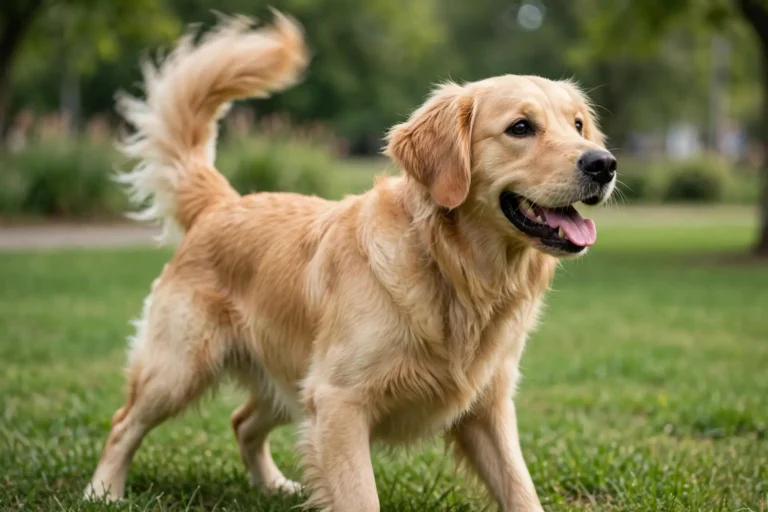
Golden Retrievers are nearly synonymous with the concept of the family dog, and that reputation is largely earned. They are patient, affectionate, and naturally gentle — qualities that translate well to households with children of various ages. Their intelligence makes them highly trainable, and their eagerness to please means they typically respond well to consistent positive reinforcement.
Like Labradors, they shed significantly. Their longer, denser coats require regular brushing to prevent matting and to manage the volume of hair they produce, particularly during spring and autumn. Anyone considering a Golden should factor in the time and cost of regular grooming as part of the ownership calculation.
Bernese Mountain Dog
For families who want a large, calm, and deeply loyal companion, the Bernese Mountain Dog is worth serious consideration. These are gentle dogs that tend to bond closely with their immediate family and are generally patient with children. Their temperament is notably quieter than retriever breeds — less bouncing energy, more settled presence.
They are, however, heavy shedders, and their large size means their food and veterinary costs are proportionally higher than smaller breeds. They also have a shorter average lifespan than many other family-friendly breeds, which is worth understanding before committing.
Boxer
Boxers bring a different kind of energy to the large dog category — playful, spirited, and strongly bonded to their families. They are known for being particularly fond of children and for maintaining a somewhat puppy-like enthusiasm well into adulthood. Boxers are protective without being aggressive, which appeals to families who want a dog that will alert them to unusual activity around the home.
They are relatively moderate shedders compared to retrievers and have short coats that require minimal grooming. Their exercise needs are high, though, and they do not thrive in very hot climates due to their shortened muzzle.
Best Medium Dog Breeds for Families
Beagle
The Beagle is a natural fit for families with children. Compact enough to be safe around younger kids, sturdy enough to genuinely play with older ones, and curious and cheerful by temperament — they bring a consistent good humor to family life that is hard to find elsewhere. Their small-to-medium size makes them practical for households without large outdoor spaces, though they still need regular exercise and mental stimulation.
Beagles are scent-driven dogs bred to follow their noses, which means recall training requires patience and a securely fenced yard is essential. They also have a tendency to vocalize — their howl and bay are part of their breed character but may be a consideration in densely housed neighborhoods.
Soft-Coated Wheaten Terrier
The Wheaten Terrier is less commonly discussed in family dog guides than it deserves to be. It is energetic and playful enough to be a genuine companion for active children, yet its temperament is consistently described as friendly and even-keeled. The breed is considered low-shedding, which is a genuine advantage for households with allergy concerns, though the silky coat does require regular brushing and periodic professional grooming to prevent matting.
Wheatens are intelligent and can be mildly independent, which means early training and consistent reinforcement are important. With proper socialization, they tend to be adaptable and sociable.
Standard Poodle
The Standard Poodle is one of the most underrated family dog choices. It combines high intelligence, genuine athleticism, and a low-shedding coat in a medium-to-large package that is broadly suitable for families, including those with allergy concerns. Poodles are highly responsive to training, patient with children, and have a playful quality that makes them excellent companions across age groups.
The grooming requirement is real — Poodle coats grow continuously and require professional clipping every six to eight weeks. However, for families managing allergies, that trade-off is often worthwhile given the reduction in airborne dander and shed hair.
Best Small Dog Breeds for Families
Cavalier King Charles Spaniel
The Cavalier is one of the few small breeds that combines genuine affection, patience with children, and a calm enough disposition to suit less active households. They are adaptable to apartment living and to homes with limited outdoor space, which makes them practical for a wider range of family situations than many larger breeds.
Their health profile deserves honest mention: Cavaliers are prone to a hereditary heart condition called mitral valve disease, and responsible ownership includes regular cardiac screening through a veterinarian. Choosing a puppy from health-tested parents significantly reduces this risk, and this is one of the clearest arguments for working with reputable breeders rather than purchasing from unvetted sources.
Bichon Frise
The Bichon Frise is a cheerful, playful, and genuinely sturdy little dog that handles the energy of children better than many small breeds. It is classified as low-shedding, which makes it a practical choice for families with mild allergies, and its size makes it suitable for smaller homes and apartments. Bichons are sociable and tend to get along well with other pets as well as children.
Like other low-shedding breeds, the Bichon’s coat grows continuously and requires regular grooming — both at-home brushing and professional trimming — to remain healthy and free from mats.
Havanese
The Havanese is the national dog of Cuba and one of the most consistently people-oriented breeds available. They thrive on company, bond closely with family members, and tend to adapt comfortably to children of varying ages. Their silky coats are low-shedding, though they do require regular maintenance. Havanese dogs are lively enough to keep up with children but calm enough not to overwhelm very young ones.
Best Hypoallergenic Dog Breeds for Families
No dog breed is truly allergen-free. All dogs produce dander, saliva, and urine, which are the actual triggers for most allergic reactions. “Hypoallergenic” breeds are those that shed less and therefore distribute less dander into the home environment, which can meaningfully reduce allergy symptoms for many people — but it is not a guarantee.
The breeds most reliably described as hypoallergenic and family-compatible include the Standard Poodle (and its smaller size variants), the Portuguese Water Dog, the Soft-Coated Wheaten Terrier, the Bichon Frise, and the Havanese. Mixed breeds like Goldendoodles and Labradoodles are widely sought for their potential to combine family-friendly temperaments with lower shedding, but because they are crosses, their coat type and dander production can vary significantly even within the same litter.
If a family member has known allergies, the most reliable approach is to spend time with the specific dog you are considering before committing. Visiting a dog of the breed, or the individual dog from a shelter or breeder, will give you a more accurate picture of your reaction than any breed classification can.
Best Big Dog Breeds for Families That Shed Less
For families who want a large breed companion without the year-round coat management that Labradors and Golden Retrievers require, the Standard Poodle is the most straightforward answer. The Giant Schnauzer and the Portuguese Water Dog are also worth considering — both are substantial, active dogs with low-shedding coats, strong trainability, and family-compatible temperaments. All of these breeds require consistent exercise and mental stimulation appropriate to their size and intelligence.
What to Consider Before Choosing a Family Dog
Your children’s ages matter more than most people acknowledge. Very young children are not yet capable of understanding or consistently following safety rules around dogs, which means supervision requirements are higher and the margin for unpredictable interactions is wider. Many dog professionals suggest that families with children under four years old consider carefully whether the timing is right, or choose a breed with a particularly calm and patient disposition.
Lifestyle compatibility is not negotiable. A high-energy working breed in an inactive household, or a small companion dog in a household with very boisterous young children, is a setup for difficulty regardless of what the breed profile says. Be honest about how your family actually lives, not how you intend to live once you have the dog.
Individual temperament always varies. Breed characteristics describe tendencies across a population, not guarantees for any individual dog. Meeting the specific dog you are considering — whether from a shelter, a rescue, or a breeder — and observing how it interacts with your children is the most important step in the process.
Training is not optional. Even the most naturally gentle breed will benefit enormously from early, consistent training using positive reinforcement methods. And training is not just for the dog — children need to learn how to interact with dogs safely, how to read body language signals that indicate discomfort, and why they should never approach a dog while it is eating, sleeping, or playing with a resource.
Introducing a Dog to Young Children Safely
Once a dog joins the household, the way the relationship is structured matters as much as the breed choice. Dogs should always have a designated safe space — a crate or a specific area of the home — where they can retreat when they need quiet time and where children know not to disturb them. Constant supervision of interactions between young children and dogs is not overprotective; it is simply appropriate given that even calm, well-trained dogs can react unpredictably when overwhelmed.
Teaching children to recognize the signs of canine stress — flattened ears, a tucked tail, stiff body posture, yawning in a non-sleepy context, and the “whale eye” expression that shows the whites of a dog’s eyes — gives them a meaningful tool for managing interactions and prevents many of the situations that escalate to bites.
You might enjoy exploring some fascinating fun facts and curiosities about animals and daily life that put lifestyle choices — including pet ownership — in a broader and often surprising context.
Adopting vs. Buying: What to Know
Both shelters and reputable breeders can be valid sources for a family dog. Shelters frequently have adult dogs whose personalities are already well-established and observable, which removes much of the uncertainty associated with predicting a puppy’s adult temperament. Adult dogs from rescue organizations can be excellent family pets, particularly if they have been fostered in a home with children.
Working with a responsible breeder, when that is the chosen route, means verifying health testing for the breed’s known conditions, being able to meet at least one parent dog to assess temperament, and avoiding any operation that prioritizes volume over animal welfare.
For more on how intentional lifestyle decisions — whether about pets, clothing, or home choices — connect to broader patterns of conscious living, FactBlaze explores a wide range of topics from fashion and style to animals, travel, and culture.
For the most up-to-date breed rankings, veterinary recommendations, and reader-reviewed information on specific dog breeds for families, Google’s search results for best dog breeds for families aggregate current expert sources and community reviews worth exploring.
Frequently Asked Questions
What is the best dog breed for families with young children?
Labrador Retrievers, Golden Retrievers, and Beagles are among the most consistently recommended breeds for families with young children, based on their patient temperament, trainability, and tolerance for the unpredictability of early childhood. That said, individual temperament assessment and proper supervision are always necessary regardless of breed.
What are the best small dog breeds for families with kids?
The Cavalier King Charles Spaniel, Bichon Frise, and Havanese are among the best small dog breeds for families. They combine manageable size with patient, affectionate temperaments that hold up well in household environments with children. Small dogs that are fragile or highly strung are generally less suitable for very young children.
What are the best hypoallergenic dog breeds for families?
The Standard Poodle, Portuguese Water Dog, Soft-Coated Wheaten Terrier, Bichon Frise, and Havanese are widely considered the most reliably low-shedding, family-compatible breeds. No breed is completely allergen-free, so spending time with the specific dog before committing is the most practical test for households with known allergies.
What are the best large dog breeds for families that do not shed much?
The Standard Poodle is the most commonly recommended large breed for families seeking lower shedding. The Giant Schnauzer and Portuguese Water Dog are also worth considering. Note that these breeds require regular professional grooming, as their coats grow continuously rather than shedding naturally.
What should families consider before getting a dog?
Key considerations include the ages of your children, the energy level and temperament of the breed relative to your family’s lifestyle, the time available for training and exercise, the long-term financial commitment to veterinary care and grooming, and whether any household member has allergies. A family dog is a commitment of ten years or more, and matching the dog’s actual needs to your genuine lifestyle — not your aspirational one — is the foundation of a successful relationship.
Conclusion
The best dog breeds for families are not simply the most popular ones — they are the ones that fit your household’s specific reality. Energy level, size, coat type, temperament, and trainability all need to align with how your family actually lives, the ages of your children, and the level of care and time you can genuinely provide.
Labradors and Goldens deserve their reputation, but so do Beagles, Standard Poodles, Cavalier King Charles Spaniels, and Bernese Mountain Dogs — each of which fits a different kind of family context. The most important step is not finding the “best” breed in the abstract but the right breed f
or your specific situation, meeting the individual dog before committing, and preparing both your family and your new pet for a relationship that genuinely works for everyone inv
olved.