
Budget travel tips for beginners
The assumption that travel requires a significant amount of money is one of the most persistent myths in the travel world, and it stops more people from starting than almost anything else. The reality is that budget travel is a skill — a learnable, improvable skill — and the people who do it well did not start out knowing how. They started, made some expensive mistakes, corrected course, and built a framework of decisions that let them travel further on less.
This guide is that framework. It covers every major cost category of travel — flights, accommodation, food, transportation, money management, and activities — with specific strategies for each, honest context about what works and what does not, and enough practical detail that a first-time traveler can put it to use immediately. Whether you want to spend a week in Portugal, two months across Southeast Asia, or explore the United States on a tight budget, the same core principles apply.
Start With a Real Budget Before You Book Anything
The most common beginner mistake is booking a flight first and figuring out the rest later. This backwards approach produces trips where the flight was cheap but the total cost was not, because the surrounding decisions were made under pressure rather than from a clear financial picture.
Before you open a flight comparison site, establish three numbers: your total available budget for the entire trip, a rough daily spending target once you arrive, and a 10 to 15 percent emergency buffer that stays untouched unless genuinely needed. Your daily spending target should account for accommodation, food, local transportation, entrance fees, and incidentals. Sites like Numbeo and Budget Your Trip provide crowd-sourced average daily costs for specific cities and countries — useful calibration before committing to a destination.
Once you have those numbers, you are in a position to evaluate flights, accommodation, and itinerary length as a whole rather than as separate decisions that can accidentally add up to more than you can afford.
How to Find Cheap Flights: The Strategies That Actually Work
Use the Right Tools and Know How to Read Them
Google Flights is the most versatile flight search tool available for beginners because it allows you to search flexibly — entering a destination without fixed dates to see a price calendar, or searching with a destination set to “Explore” to see the cheapest places you can fly to from your home airport. Skyscanner works similarly and is particularly strong for international routes operated by carriers that do not appear on Google Flights.
Set price alerts for routes you are seriously considering. Both Google Flights and Kayak allow this, and the alerts remove the psychological burden of checking prices daily while ensuring you are notified when a meaningful drop occurs..
Timing Your Search and Your Departure
The general guidance for international flights is to search four to eight months in advance for the best combination of availability and price. For domestic flights, six to eight weeks in advance tends to be the sweet spot. Booking too early sometimes produces higher prices because airlines have not released their promotional fares yet; booking too late produces higher prices because lower fare classes have sold out.
Midweek departures — typically Tuesdays and Wednesdays — tend to be cheaper than Friday and Sunday travel, which carries premium pricing from business and leisure demand. If your schedule is flexible, even a one or two day shift in departure can produce meaningful savings on the same route.
Shoulder Season: The Budget Traveler’s Best Friend
Shoulder season — the period between a destination’s peak tourist season and its low season — is where budget travel finds its strongest leverage. Prices for flights and accommodation are typically lower than at peak times, the destination is less crowded, and the experience is often genuinely better because you are seeing the place without the density of summer tourist traffic.
For European destinations, shoulder season typically runs from April through May and September through October. For Southeast Asia, it varies significantly by country and region, but generally corresponds to the monsoon-adjacent months when rain is possible but not constant. Research the shoulder season for your specific destination rather than applying a universal assumption.
Budget Airlines and the True Cost of Cheap Fares
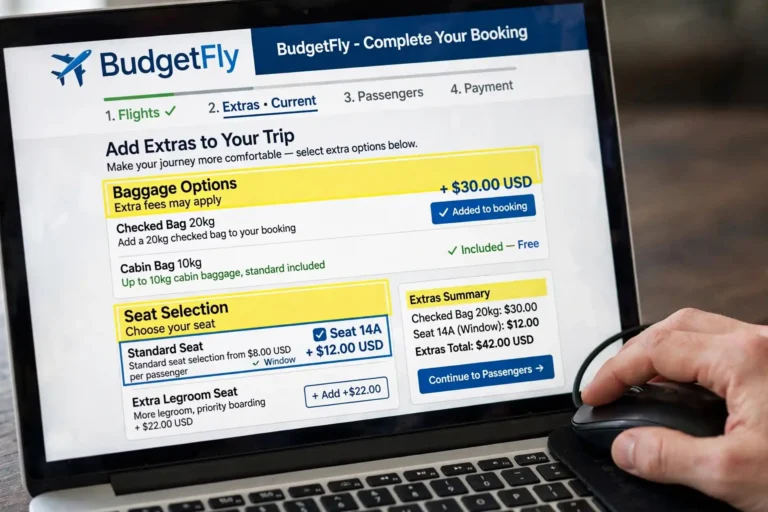
Low-cost carriers offer genuinely lower base fares, but the total cost requires careful calculation. Baggage fees, seat selection charges, online check-in fees, and credit card surcharges can collectively add more to the ticket price than the apparent saving. When evaluating a budget airline fare, price out your specific configuration — carry-on only if possible, no seat selection, no extras — and compare the total to a full-service carrier on the same route before concluding which is actually cheaper.
Accommodation: Where Budget Travelers Save the Most
Hostels Are Not What You Think They Are
The hostel experience has changed considerably. The best hostels in major travel destinations now offer private rooms as well as dormitories, high-quality common areas, organized social events, and well-maintained facilities that bear no resemblance to the stereotype of a dirty bunk room. Budget travel tips for beginners is For solo travelers, hostels also solve the social isolation problem of solo travel by creating an environment where meeting people is natural rather than forced.
Hostelworld and Booking.com both have strong hostel inventory with genuine review systems. When evaluating options, prioritize cleanliness ratings and reviews that specifically mention the atmosphere and staff. A hostel with a highly reviewed common room and an active notice board for activities will produce a significantly richer experience than a slightly cheaper but socially dead alternative.
Night Transport as Free Accommodation
One of the more counterintuitive budget travel tips is that overnight transport — a night train between cities, an overnight bus, a ferry with a reclining seat — effectively provides free accommodation while simultaneously getting you to your next destination. This works particularly well in Europe, where the Interrail and Eurail pass systems make overnight rail travel affordable, and in Southeast Asia, where overnight buses between major cities are inexpensive, widely available, and surprisingly comfortable.
The trade-off is sleep quality, which is genuinely lower on overnight transport than in a proper bed. Use this strategy for shorter journeys or when you have a low-activity day arriving at the next destination, rather than arriving for an immediate full day of activity.
Work Exchanges and Alternative Accommodation
Platforms like Worldpackers and WWOOF (World Wide Opportunities on Organic Farms) allow travelers to exchange a few hours of work per day — typically four to five hours — for accommodation and sometimes meals. This is not for every trip or every traveler, but for those with time flexibility and an interest in genuine local immersion, it can dramatically reduce accommodation costs for extended periods.
Eating Well Without Spending Much
The Five-Block Rule for Finding Real Food
The most reliable budget food strategy in any tourist destination is physical distance from the main attraction. Walk at least five blocks from any major sight, market, or tourist area, and the restaurant landscape changes: fewer laminated menus with photographs, more local customers, lower prices, and generally better food. The premium charged in tourist-adjacent restaurants is essentially an ignorance tax — it only applies if you do not know how far to walk.
Street Food and Market Eating
In much of Asia, Latin America, and parts of Africa, street food and market vendors represent the primary eating culture of the country rather than a budget fallback. Eating at a Vietnamese pho stall at 7 a.m., assembling lunch from a covered Thai market, or following the smell of grilled meat at an evening street market in Oaxaca is not “roughing it” — it is eating as local people actually eat, and it is almost always cheaper, fresher, and more interesting than a restaurant. For budget travelers, this is not a compromise; it is an advantage.
The Lunch Upgrade Strategy
In countries where restaurant dining is part of the experience you want, make lunch your main meal rather than dinner. Many restaurants — in Europe especially — offer a fixed-price lunch menu (prix fixe, menú del día, dagschotel) that includes two or three courses at a price significantly below the dinner equivalent of the same food. You eat well, you eat at a quieter time, and you budget the rest of the day around a lighter evening meal.
Managing Money Abroad: Avoid the Traps That Bleed Budgets
Get a Zero-Foreign-Transaction-Fee Card Before You Leave
Foreign transaction fees — typically 1 to 3 percent charged by your bank on every purchase made in a foreign currency — add up across a trip faster than most beginners realize. Carry debit and credit cards that explicitly charge zero foreign transaction fees. In the US, Charles Schwab’s high-yield investor checking account is widely recommended because it waives ATM fees worldwide and recharges them monthly. Travel-specific credit cards like the Chase Sapphire Preferred or Capital One Venture also offer no foreign transaction fees and accumulate points that can offset future travel costs.
Always Pay in Local Currency
When a card terminal abroad offers to charge you in your home currency rather than the local currency, decline. This is called Dynamic Currency Conversion (DCC), and the exchange rate applied is almost always significantly worse than what your bank’s standard conversion would offer. Always choose the local currency option, even if the terminal implies that your home currency is more convenient.
ATM Strategy to Minimize Fees
Withdraw larger amounts less frequently rather than small amounts every few days. Most ATM transactions involve a flat fee from the local bank regardless of the amount withdrawn, so fewer, larger transactions reduce the total fee paid. Research whether your bank has international partner banks that waive their portion of ATM fees, and use those ATMs when available.
Pack Light: It Is a Financial Decision as Much as a Comfort One
Traveling with only carry-on luggage eliminates checked baggage fees on budget airlines — which can equal or exceed the cost of the flight itself — removes the risk of lost luggage, and makes navigating public transport between cities significantly easier. On some itineraries, particularly those involving multiple short flights or frequent city-hopping, baggage fees saved across the trip can amount to several hundred dollars.
The practical approach is a packing list built around versatility rather than volume: neutral-colored clothing that layers and mixes across outfits, fast-drying fabric that can be hand-washed and worn again quickly, and a genuine commitment to leaving behind items whose utility is hypothetical rather than certain. Pack the bag, carry it around the block, and remove anything that is not being justified by daily use.
Free and Low-Cost Activities: What You See Should Not Cost Much
Most of the experiences that define memorable travel are not expensive. Free walking tours — available in virtually every major European city and many cities in Asia and the Americas — provide context, local knowledge, and orientation for the cost of a tip to the guide at the end. Parks, public markets, beaches, hiking trails, religious architecture, and neighborhood wandering cost nothing and often produce the moments travelers remember most clearly.
Many major museums offer free entry on specific days or during specific hours — often the first Sunday of the month, or the last two hours before closing. Research the free admission policies of major institutions in your destination before paying full price.
The broader principle is that local public life — the market on a Wednesday morning, the park where people play chess on a Sunday afternoon, the neighborhood where the best cheap food is found — is available to everyone who shows up. Budget travelers access this as readily as any other traveler; in some ways, the constraint of a tight budget is what forces the exploration that produces the best experiences.
Travel Insurance Is Not Optional
For first-time budget travelers, travel insurance feels like an unnecessary expense on an already tight budget. This is a common and potentially very expensive mistake. A single medical emergency abroad — a broken bone, an illness requiring hospitalization, an emergency evacuation — can produce a bill that dwarfs the entire budget of the trip. A comprehensive travel insurance policy covering medical emergencies, trip cancellation, and lost luggage costs a fraction of that risk and protects the investment of everything you have planned and paid for.
Compare policies on comparison sites like Squaremouth or InsureMyTrip before purchasing, and read the policy’s exclusions carefully — particularly regarding adventure activities, pre-existing conditions, and the definition of “covered cancellation reasons.”
Approaching a trip on a budget involves the same kind of intentional prioritization that makes any constrained situation more manageable. The same thought process applies when working on a home with limited funds — understanding which changes produce the most value for the investment, as explored in our guide to kitchen remodel ideas on a budget. And for those returning home after a trip to pets who have been unsettled by the absence of their usual routine — changes that might explain why a cat is crying at night — knowing what to expect makes the transition back easier for everyone.
For current flight price comparisons, hostel reviews, and destination-specific daily cost estimates, Google’s search results for budget travel tips connect you to updated community resources, price comparison tools, and traveler forums that reflect current pricing realities.
Frequently Asked Questions
How much money do I need to start budget traveling?
The amount depends on the destination, duration, and your baseline costs at home. Southeast Asia is often cited as the most accessible region for genuine budget travel, with daily costs in countries like Vietnam, Thailand, and Cambodia sometimes as low as $30 to $50 including accommodation, food, and local transport. European destinations typically require $60 to $100 per day at minimum. The key is setting a realistic total budget before booking and researching average daily costs for your specific destination using tools like Numbeo or Budget Your Trip.
What is the cheapest way to find flights?
Use Google Flights or Skyscanner with flexible dates and, if possible, flexible destinations. Set price alerts for routes you are seriously considering. Book international flights four to eight months in advance. Consider midweek departures, indirect routes through alternative hubs, and flying into secondary airports near your primary destination. When using budget airlines, calculate the full cost including baggage and fees before comparing to a full-service alternative.
Are hostels safe for solo travelers?
Yes, in the overwhelming majority of cases. Modern hostels have security measures including key-card room access, secure lockers for valuables, and 24-hour staff. Check recent reviews specifically for comments about security and staff responsiveness. For solo female travelers, most hostels offer female-only dormitory options. Private rooms in hostels cost more than dormitories but are still typically cheaper than hotel equivalents while offering the same social infrastructure.
How do I avoid overspending on food while traveling?
Eat where locals eat, not where tourists congregate. Walk away from major attractions before looking for food. Prioritize street food and local markets. Make lunch your main meal and eat a lighter evening meal. Cook simple meals using hostel kitchen facilities. Use apps like Too Good To Go to purchase surplus food at a discount. In countries with high restaurant prices, even one self-catered meal per day can produce significant daily savings.
Do I need travel insurance on a budget trip?
Yes. Travel insurance is not optional for responsible budget travel — it is a non-negotiable protection against costs that could far exceed your total trip budget. Medical emergencies, emergency evacuations, and trip cancellation scenarios can produce expenses of thousands of dollars. The relative cost of a comprehensive policy is small against this risk. Compare policies on dedicated comparison sites and ensure the policy covers your specific planned activities.
Conclusion
Budget travel is ultimately about making deliberate decisions rather than default ones. The traveler who books the first flight result, stays in the first hotel that appears, and eats at the restaurant immediately outside the museum is not spending more because they enjoy it — they are spending more because they did not stop to ask whether there was a better option.
The strategies in this guide all share the same logic: pause, compare, choose with intention. Do this across flights, accommodation, food, transport, and money management, and the savings compound into the kind of travel that most people assume requires a much larger budget than it actually does.