What Travel Rewards Credit Cards Offer Beyond Points
Beyond points and miles, travel rewards credit card benefits often include trip insurance, rental car coverage, lounge access, and fee credits you may never use. These perks can be worth more than the rewards themselves, but only if you know they exist and meet their conditions.
The catch is that every card and issuer handles them differently. What follows is a map of the common categories, not a promise about any particular card, so treat your card’s own benefits guide as the final word.
Travel rewards credit card benefits people forget to use
Trip cancellation and interruption coverage is the perk people most often forget. Some cards reimburse prepaid, nonrefundable costs if a covered reason, such as illness or severe weather, stops or cuts short a trip. The usual condition is that you paid for the trip, or part of it, with that card. Coverage limits, covered reasons, and who counts as a traveler vary widely, so read the terms before relying on it instead of a standalone policy. If you’re comparing the two, it helps to understand how travel insurance works in general first.
Rental car collision coverage is another. Many cards offer damage coverage when you decline the rental company’s collision waiver and pay with the card. The key word to look for is whether it’s primary or secondary. Primary coverage pays first; secondary coverage only kicks in after your own auto insurance, which can mean a claim on your personal policy. Coverage also tends to exclude certain countries, vehicle types, and long rentals.
Then there are smaller protections that quietly save money: reimbursement for essentials when a bag is delayed, coverage for lost luggage, and trip delay benefits that pay for a meal or hotel room after a long delay. These usually have waiting periods and dollar caps, and they almost always require receipts.
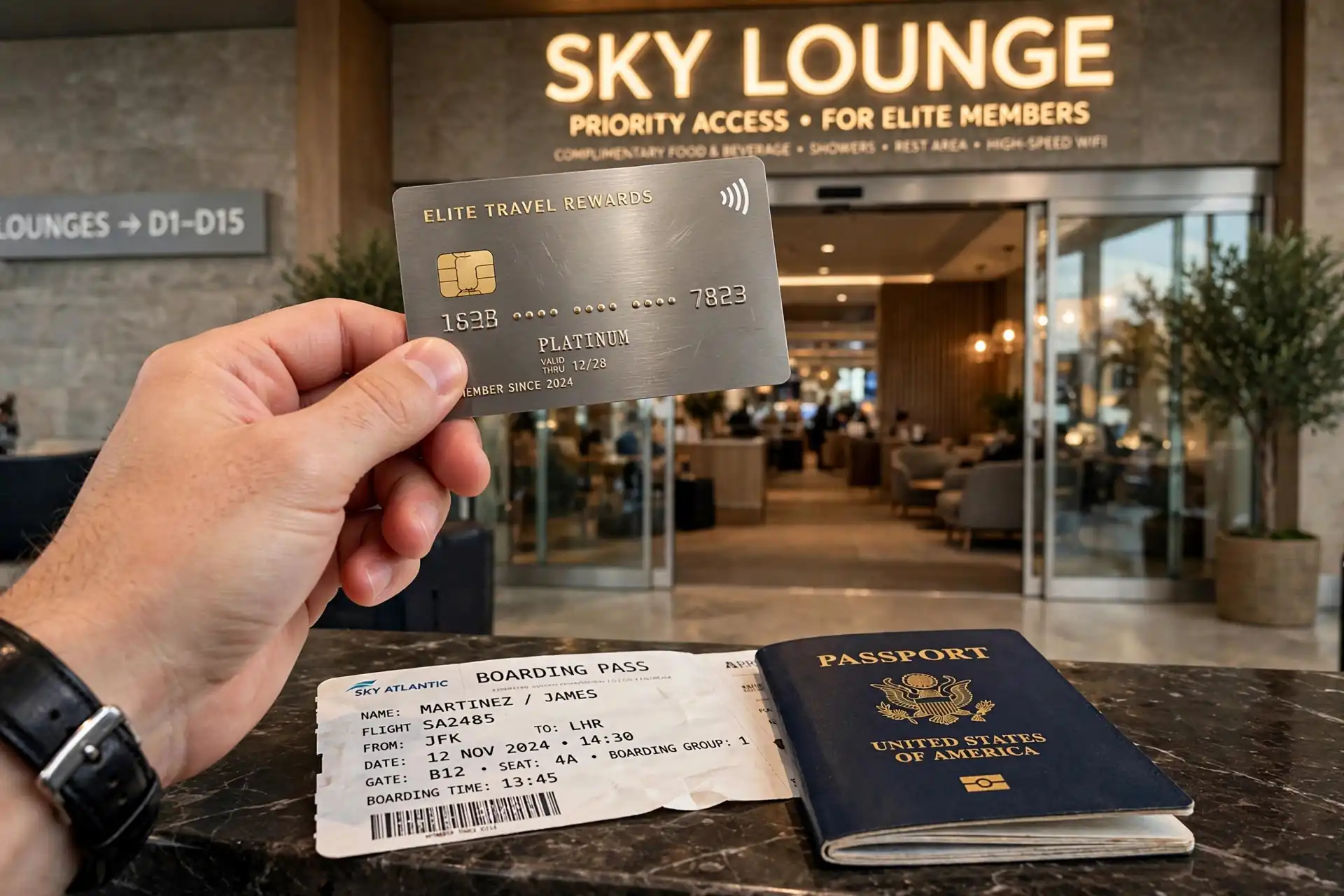
Lounge access sits at the premium end. Some cards include a lounge network membership or access to the issuer’s own lounges. Check whether guests are included, how many visits you get, and whether access depends on the airline you’re flying that day.
Fee credits are easy to leave on the table. Some cards reimburse the application fee for trusted traveler programs, offer annual travel credits, or cover checked bag fees on a specific airline. Many of these must be activated or enrolled in first, and they reset on a schedule.
A card with no foreign transaction fees matters more than it sounds. On a card that charges one, every purchase abroad costs a few percent extra, which quietly erodes whatever you’re earning. That pairs with the advice on mistakes people make exchanging currency abroad, since card fees and exchange markups stack.
What the perks cost you
None of this is free. Cards with rich travel benefits often carry annual fees, and carrying a balance at high interest wipes out the value of any perk. The Federal Trade Commission’s consumer credit pages explain card costs and your rights in plain language.
Before your next trip, find your card’s benefits guide, usually on the issuer’s website, and note what’s covered, what needs activating, and what proof a claim requires. A perk you don’t know about is worth exactly nothing.
Travel rewards credit cards are sold on points and miles, but the most valuable benefits are often the ones nobody advertises on the signup page. Lounge access, trip protections, and elite status shortcuts can be worth more than the points themselves, especially for travelers who know how to use them.
Trip protections: the hidden insurance policy
Many mid-tier and premium cards include travel insurance that duplicates coverage people buy separately.
Trip cancellation and interruption
Covered reasons typically include illness, severe weather, and jury duty, reimbursing prepaid nonrefundable costs. Coverage limits vary widely, from a few thousand to $10,000+ per trip on premium cards. The key detail: you must pay for the trip with the card for coverage to apply. Partial payment usually still triggers coverage, but check the terms. This benefit alone can replace standalone trip insurance for many travelers.
Baggage and delay coverage
Lost luggage reimbursement, delayed baggage essentials coverage, and trip delay benefits (meals and hotels during long delays) are standard on many travel cards. These pay out in exactly the situations budget travelers fear most. If you fly budget airlines where disruptions sting more, our guide to budget airline mistakes pairs well with understanding these protections.
Rental car coverage
Primary rental car collision coverage, offered by several top travel cards, lets you decline the rental company’s expensive damage waiver. Primary means it pays first without involving your personal auto insurance. This single benefit can save hundreds per rental. Note the exclusions: certain countries, vehicle types, and rental durations are commonly excluded. The Consumer Financial Protection Bureau explains how card benefits fit into broader consumer protections.
Lounge access and airport comfort
Airport lounges transform layovers, and cards are the main way in for most travelers.
How card lounge access works
Premium cards typically include Priority Pass membership or proprietary lounge networks. Priority Pass covers 1,300+ lounges worldwide, though quality varies enormously from champagne bars to sad rooms with pretzels. Airline-specific cards unlock that airline’s lounges. Understand exactly what your card includes: some offer unlimited visits, others a set number annually, and guest policies differ.
Is it worth the annual fee?
Do the math on your travel patterns. If you take six trips a year with two lounge visits each, and value each visit at $25-30 in food, drinks, wifi, and comfort, that is $300-360 in value. Add trip protections and the fee often justifies itself. If you fly twice a year, it rarely does. Be honest about your actual travel, not aspirational travel.
Status shortcuts and elite perks
Cards increasingly offer paths to elite status that once required pure flying.
Spending-based status
Several airline and hotel cards grant elite status or qualifying credits based on annual spending. For high spenders who fly moderately, this can unlock upgrades, free checked bags, and priority boarding without the butt-in-seat requirements. Calculate whether your natural spending reaches the thresholds; manufactured spending to chase status rarely pencils out.
Automatic mid-tier status
Hotel cards frequently include automatic silver or gold status: late checkout, room upgrades, bonus points. These perks apply from day one without any stays. For road warriors, the right hotel card’s automatic status can be more valuable than its points. Our packing strategy guide on carry-on versus checked decisions complements the free-checked-bag perks status provides.
The less obvious perks
Beyond the big three categories, cards hide useful extras.
Global Entry and TSA PreCheck credits
Many travel cards reimburse the application fee every four to five years. Global Entry includes PreCheck, making it the better value. If your card offers this and you do not have it, you are leaving money and hours of airport time on the table.
Travel and dining credits
Airline fee credits, hotel credits, and dining credits can offset annual fees substantially, but only if you would spend that money anyway. A $300 travel credit is worth $300 if you travel; it is worth $0 if you manufacture spending to use it. Audit your actual usage annually.
No foreign transaction fees
Standard on travel cards, worth 2-3% on every international purchase. For regular international travelers, this quietly saves hundreds yearly. It is table stakes for a travel card, not a differentiator, but verify any card you carry abroad has it.
Frequently Asked Questions
Are travel credit card benefits worth high annual fees?
Only if you use them. Add up the value of benefits you will actually use: lounge visits, trip protections, credits, status perks. If the total comfortably exceeds the fee, keep the card. If you are paying for aspirational benefits, downgrade.
Do I need to pay the full trip with the card for protections?
Usually you need to charge at least part of the trip to the card, with full payment being safest. Terms vary by issuer and benefit. Read the guide to benefits that comes with your card, the actual legal document, not the marketing summary.
Can I get lounge access without a premium card?
Yes, through day passes, Priority Pass standalone memberships, or airline day passes. But per-visit costs add up fast. For frequent travelers, the card bundle is usually cheaper. Infrequent travelers should pay per visit.
What is the difference between primary and secondary rental coverage?
Primary coverage pays first, without touching your personal auto insurance. Secondary covers what your personal policy does not. Primary is significantly more valuable because it avoids claims on your personal policy and its deductible.
Should I get an airline-specific or general travel card?
Airline cards win if you are loyal to one airline and want its specific perks like free checked bags and priority boarding. General travel cards win for flexibility: transferable points usable across airlines and hotels. Most serious travelers eventually carry one of each.
Conclusion
Points get the marketing, but protections, lounges, and status perks often deliver more real value. The right card for you depends on how you actually travel, not how you wish you traveled. Audit your benefits yearly, use what you pay for, and downgrade what you do not. For more travel money guides, visit the Factblaze homepage.