How to Tell If Two Cats Are Actually Playing or Fighting
Play between cats stays loose and silent, with soft paws, relaxed bodies, and frequent pauses where both cats reset or switch roles. A real fight is louder, stiffer, and more one-sided — hissing, growling, flattened ears, and a cat that’s clearly trying to get away rather than taking a turn. Watching the whole sequence, not just one moment of tangled fur, is what settles the question.
Signs It’s Play
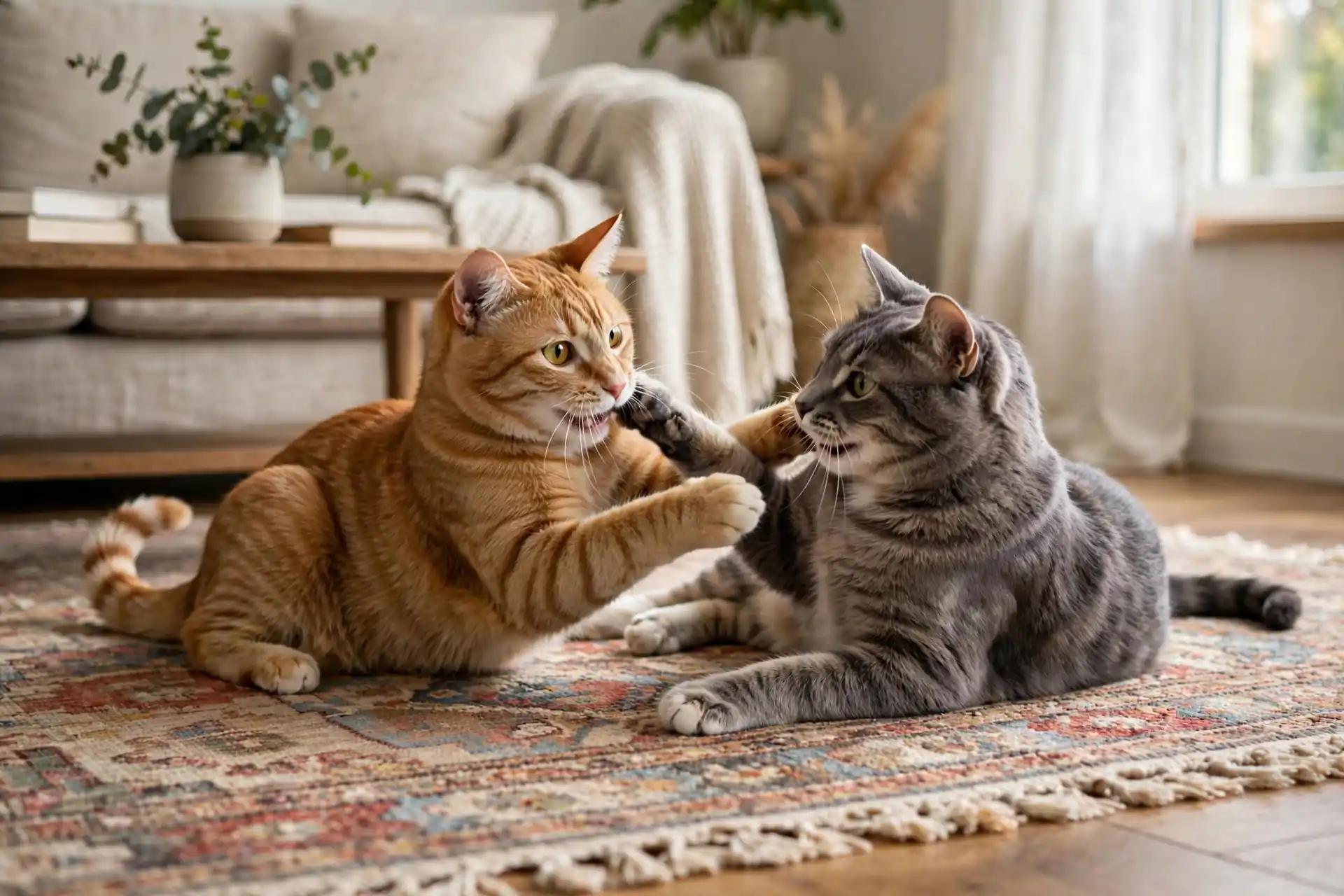
Play involves rolling, chasing, and swatting with claws mostly retracted, and it typically pauses on its own every 30 seconds or so, with both cats calm enough to walk away or start again. Ears stay forward or neutral, tails are relaxed or flicking loosely rather than puffed, and bite pressure is light enough to leave no mark. If you separate two cats mid-tussle and one immediately goes back for more, that’s a strong sign it was mutual.
Signs It’s a Fight
A real fight sounds different before it looks different — growling, yowling, or hissing usually starts the exchange. Ears pin flat against the head, pupils dilate, and fur along the spine and tail puffs out. One cat is typically trying to flee or hide rather than re-engage, and claws stay out through contact, which can draw blood. Bite marks around the neck or head, or a cat that hides for hours afterward, point to a genuine conflict rather than rough play that got loud for a second. A fight also tends to end abruptly, with one cat bolting from the room, rather than winding down gradually the way play sessions usually do.
What to Do in the Moment
Never grab or reach between two cats mid-fight — redirected aggression sends plenty of owners to urgent care every year, and a startled cat can’t tell the difference between a threat and a hand. A loud noise, a thrown pillow, or spraying water toward (not directly at) the cats is a safer way to break contact. Once they’ve separated, give both cats their own space for a while rather than forcing them back together immediately; a stressed cat needs time to settle before another introduction attempt goes any better.
Reading the Broader Relationship
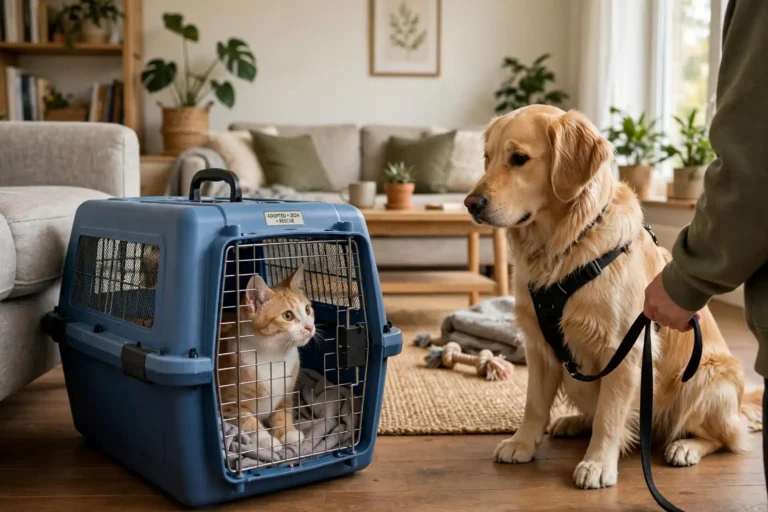
Two cats that fight repeatedly over the same resource — a food bowl, a litter box, a favorite window perch — are telling you something about resource competition, not just personality clash. Adding a second bowl, box, or perch in a separate location often resolves it faster than any amount of supervision. Tail position adds another layer of information here; our guide to reading a cat’s tail position covers the signals worth watching during any interaction, not just rough ones. If you’re introducing a new cat to an established pet, the same behavioral cues apply, and our piece on introducing a new cat to a resident dog covers a related version of this same reading process.
If fights are frequent, drawing blood, or escalating rather than settling with more resources and separate space, it’s worth a conversation with your vet or a certified cat behavior consultant — the Cornell Feline Health Center’s resources are a solid reference point. Not every hiss means real trouble, but a pattern of one-sided aggression is worth taking seriously before it becomes the household norm.
Why This Distinction Matters
Two cats wrestling on the living room floor can look alarming to the uninitiated: the biting, the bunny kicking, the dramatic vocalizations. Yet most of the time it is exactly what young animals are supposed to do. Play fighting is how kittens learn bite inhibition, hunting coordination, and social boundaries. Mistaking play for real aggression leads to unnecessary separation that deprives cats of crucial social learning. Mistaking real aggression for play leads to injuries that could have been prevented. The distinction matters because the correct response is opposite in each case.
The core difference is emotional tone. Play is loose, bouncy, and reciprocal. Real fighting is tense, intense, and one sided. This sounds simple, but in the moment, with fur flying, even experienced cat owners second guess themselves. Learning the specific signals removes the guesswork. It also helps to understand the broader feline communication system, including what a cat’s slow blink means, since relaxed social signaling looks completely different from aroused confrontation.
The Reciprocity Test
The single most reliable indicator is role reversal. In play, cats take turns being the chaser and the chased, the biter and the bitten, the cat on top and the cat underneath. If you watch for a minute, the advantage shifts back and forth. In real aggression, one cat is consistently the aggressor and the other is consistently trying to escape. The victim does not voluntarily re engage. If one cat keeps returning for more after a pause, it is play. If one cat is hiding and the other is seeking, it is not.
Body Language: The Detailed Breakdown
Ears tell a clear story. In play, ears stay up or rotate casually. In real aggression, ears flatten hard against the head, protecting them from damage. This is one of the fastest signals to check in a confusing moment. Eyes differ too. Playful cats may have dilated pupils from excitement, but their gaze is soft and they blink. Aggressive cats fix a hard, unblinking stare on their target. The body follows: play involves loose, wiggly movements and exaggerated pounces, while fighting involves rigid posture, piloerection with fur standing on end, and low stalking crouches.
Vocalization is another divider. Play is mostly silent or accompanied by soft chirps. Real fights are loud: growling, hissing, screaming, and the distinctive caterwaul. If the encounter sounds like it belongs in a horror film, it is not play. Claws are the physical confirmation. Play biting is inhibited, mouth open but pressure controlled, and claws stay sheathed during the bunny kicks. Real aggression uses full claws and uninhibited bites that break skin and draw blood.
The Pause Pattern
Play has a rhythm of engagement and disengagement. Cats wrestle intensely for a burst, then separate, groom themselves or sit calmly, then re engage. These pauses are social negotiation, both parties confirming continued consent. Real fights do not pause cooperatively. They pause only when one cat creates distance by fleeing or when a human intervenes. If you see mutual calm breaks, you are watching play.
When Play Tips Into Real Aggression
Play can escalate, especially between cats that are tired, overstimulated, or poorly matched in size and age. Warning signs of tipping include: one cat’s body going rigid mid play, vocalizations shifting from silent to growling, the larger cat refusing to let the smaller one disengage, and play sessions that get longer and more intense without pauses. Kittens raised together usually self regulate well. Newly introduced adult cats are the highest risk group for play that curdles.
If you need to intervene, never use your hands. Toss a pillow between them, clap loudly, or place a large piece of cardboard as a visual barrier. Then separate them into different rooms to cool down fully, which takes longer than people expect, sometimes hours. Reintroduce gradually. Punishing either cat increases the underlying tension and makes the next encounter worse. For households working through cat to cat tension, introducing a new pet to a multi cat household properly prevents most of these conflicts from developing. More cat behavior guidance is at Factblaze.
How to Reintroduce Cats After a Bad Fight
Separate the cats completely for at least a week, with no visual contact. A bad fight floods both cats with stress hormones that take days to clear, and every re-exposure before they have calmed down restarts the clock. Each cat gets its own room with food, water, litter, and hiding spots. This is a reset, not a punishment.
Start scent swapping around day three. Exchange blankets or rub a soft cloth on each cat’s cheeks and place it near the other’s food bowl. If a cat hisses at the scent item, move it farther from the food and keep going — repeated calm exposure builds a neutral association. Feliway diffusers in both rooms can help during this phase.
After a calm week of scent work, feed on opposite sides of a closed door, then graduate to a baby gate or cracked door for visual contact during meals. Watch body language closely: relaxed eating is progress, while growling, staring, or refusing food means more time at the previous step. Short supervised visits in a shared room come last, and only when gated meals have been peaceful for several days.
End every session before tension builds, even if it is going well. Most successful reintroductions take three to six weeks. If a second real fight breaks out, separate again for another full week — pushing through rarely works.
Frequently Asked Questions
Is it normal for cats to bite each other’s necks during play?
Yes, neck biting is standard play behavior inherited from hunting instincts. In play, the bite is inhibited and does not break skin. The bitten cat typically responds by wrestling rather than fleeing in panic. If neck bites are breaking skin or the bitten cat screams and hides, the line has been crossed.
Should I let my cats play fight or stop them?
Let them play. Play fighting is developmentally important and socially bonding. Intervene only if you see the escalation signs: flattened ears, hard stares, real vocalizations, or one cat unable to disengage. Constant interruption of healthy play creates frustrated, under socialized cats.
Why does my older cat attack the kitten during play?
Size and energy mismatches cause most intergenerational play problems. The older cat may play too roughly without meaning harm, or may be signaling that it has had enough while the kitten keeps coming. Provide the kitten with independent play outlets and give the older cat escape routes and solo rest time. Supervise until you are confident in their dynamic.
Do cats play fight with humans the same way?
Cats direct play aggression at human hands and feet when those body parts have been used as toys, which is why experts advise never wiggling fingers as kitten toys. Redirect to wand toys and structured play sessions. A cat that ambushes ankles is usually an under played cat, not a mean one.
Can two cats that fight ever learn to play?
Sometimes, with proper reintroduction. Cats that genuinely dislike each other may never become playmates, but many conflict pairs are actually cats with a broken introduction rather than true incompatibility. A slow, scent first reintroduction process resolves a surprising number of cases. True ongoing aggression despite proper introduction may require permanent management or professional behavioral help.
Conclusion
Play is reciprocal, loose, quiet, and punctuated by mutual pauses. Fighting is one sided, tense, loud, and relentless. Check ears, eyes, claws, and the reciprocity of roles, and you will rarely be confused. Let healthy play flourish, intervene early when it tips, and never punish cats for communicating. Understanding this one distinction transforms multi cat household management from anxiety to confidence. For professional guidance on feline social behavior, the American Association of Feline Practitioners publishes cat friendly resources developed by veterinary behaviorists.