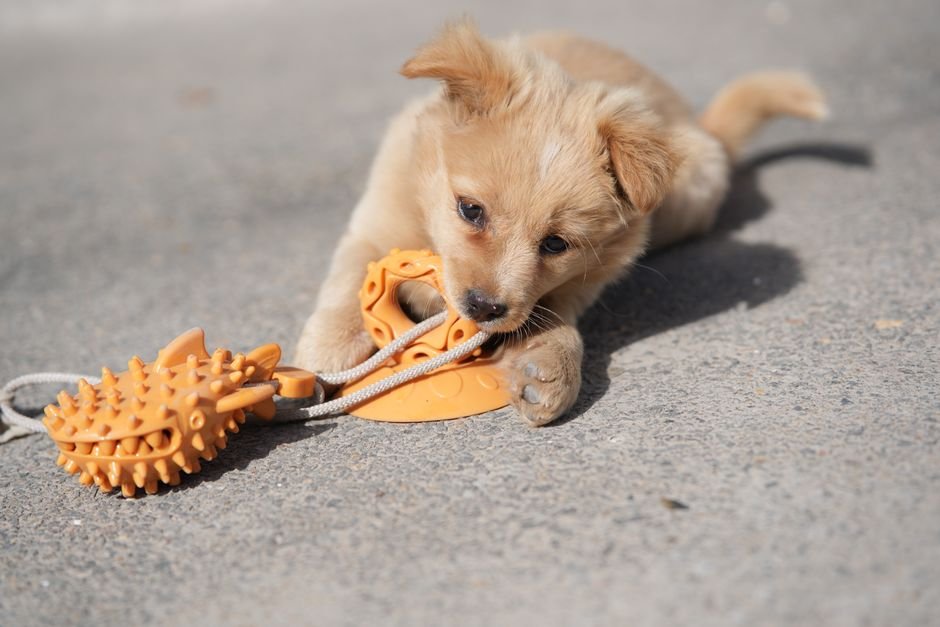
How to Tell If a Puppy Is Teething Versus Just Chewing
If your puppy is somewhere between three and six months old and suddenly chewing everything in reach, teething is the likely cause. If the chewing started earlier, carries on well past seven months, or happens mostly when your puppy is alone or under-exercised, the puppy teething vs chewing question tips toward ordinary chewing, which calls for a different fix.
From across the room, both look the same: a puppy with its jaws around a chair leg. The difference is in the timing, the mouth, and what the chewing seems to be for.
Reading the signs of puppy teething vs chewing
Teething
Puppies grow 28 baby teeth in their first weeks of life and start swapping them for 42 adult teeth at around three to four months. Most have a full adult set by six or seven months. During that window, you may notice:
- Tiny teeth on the floor, or small spots of blood on a chew toy
- Gums that look red or puffy where a new tooth is coming through
- A preference for cold or soft things to chew, plus extra drool
- Chewing that ramps up in the evening, when puppies are tired and mouthy
Don’t worry if you never find a lost tooth. Puppies often swallow them, and that’s normal.
Ordinary chewing
Chewing doesn’t stop once the adult teeth are in. Young dogs chew to explore, to burn energy, and to settle themselves, and a lot of destructive chewing in adolescent dogs traces back to boredom or too little exercise. If the damage clusters around doors or happens mainly when you leave, that points to stress about being alone rather than sore gums, and it’s worth raising with your vet or a qualified positive-reinforcement trainer.
What helps during the teething phase
Give your puppy a legal outlet that feels good on sore gums. Soft rubber teething toys, rope toys, and a clean washcloth soaked in water and frozen are all popular choices, used under supervision so nothing gets torn apart and swallowed. Rotate toys every few days to keep them interesting; the ideas in what enrichment toys do for a bored dog work just as well for a teething puppy.
Skip anything so hard you couldn’t dent it with a thumbnail, such as antlers, hooves, or cooked bones, which can crack baby and adult teeth alike. Manage the environment instead of relying on correction: cords, shoes, and houseplants are easier to move than to guard, and a puppy-proofing checklist covers the usual hazards room by room.
When your puppy mouths your hands, calmly swap in a toy. Yelling or physical punishment tends to make a sore, overtired puppy more frantic, not less.
When to call the vet
Sometimes a baby tooth doesn’t fall out and the adult tooth grows in right beside it. These retained teeth can push adult teeth out of line, so if you see two teeth sharing one spot, book a check. The American Veterinary Dental College has owner information on how a dog’s teeth should develop.
Treat these as emergencies: a broken tooth with pink or red showing in the center, repeated vomiting or straining after chewing something, a swollen face, or a puppy that stops eating. Swallowed pieces of toys, socks, or bones can cause blockages that need a vet the same day.
Teething ends. Chewing habits don’t, so the toys and routines you set up now are the ones your adult dog will keep.