What a Cat’s Kneading Behavior Means
Cats knead because the motion is wired in from kittenhood, when pressing on their mother’s belly helped the milk flow while they nursed. Adult cats keep doing it mostly when they feel safe and content, and partly to leave their scent on a spot they’ve claimed.
If you searched “why do cats knead” after being pummeled on the lap at 6 a.m., that’s the short answer. The longer one explains a few of the quirks that come with it.
Kneading, often called “making biscuits,” is a slow push with the front paws, left and right in turn, usually with the claws flexing in and out. Many cats purr at the same time, half-close their eyes, or drool a little. All of that fits the nursing origin: it’s a comfort ritual that carried over into adulthood. The purr usually means contentment here, though what a cat’s purring communicates explains why that isn’t always the case.
Scent is the second piece. Cats have scent glands between their toe pads, so pressing into a blanket, a cushion, or your leg marks it as familiar. That may be why a cat kneads the same favorite spot night after night, or kneads you in particular.
Not every cat kneads, and that’s fine too. Some do it daily for life, others rarely or never, and a cat that doesn’t knead isn’t any less settled. A few cats even knead the air while lying on their backs, which is the same behavior with nothing underneath the paws.
Why do cats knead before lying down?
Wild ancestors likely trampled grass or leaves to make a soft, safe place to rest, and the knead-and-circle routine before a nap may be a leftover of that. It usually ends with a slow turn or two and a flop.
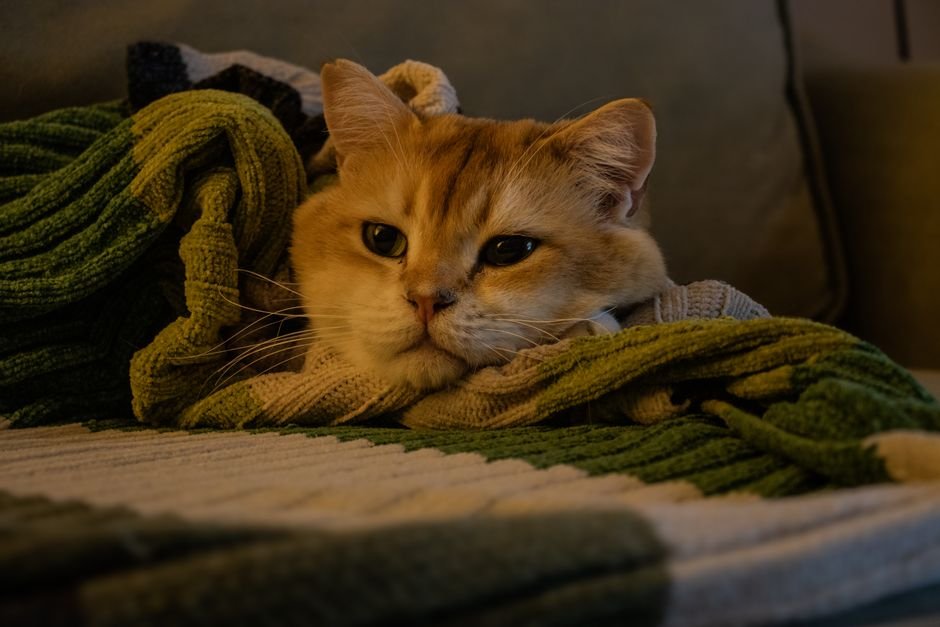
Since kneading is generally a sign your cat feels good, there’s no reason to discourage it. If the claws hurt, a thick folded blanket on your lap works better than pushing the cat off, which can confuse an animal that’s showing trust. Keeping claws trimmed and offering a sturdy scratching post helps too. Scolding just teaches a cat that your lap isn’t a safe place.
A couple of patterns deserve a closer look. Some cats knead while sucking or chewing on fabric, and a cat that swallows pieces of it can end up with a dangerous blockage in the gut. Vomiting, refusing food, or straining in the litter box after eating fabric is an emergency. A sudden change in kneading habits alongside hiding, or other shifts in behavior, is also worth mentioning to your vet, since cats are good at concealing discomfort. Reading your cat’s tail position at the same time can help you tell a relaxed cat from an uneasy one.
The Cornell Feline Health Center publishes reliable owner information on cat behavior and health if you want to read further, including advice on scratching and play.
Most of the time, a kneading cat is simply a comfortable one. Let it happen, and keep a blanket handy.