What a Dog’s Yawning Signals in Different Contexts
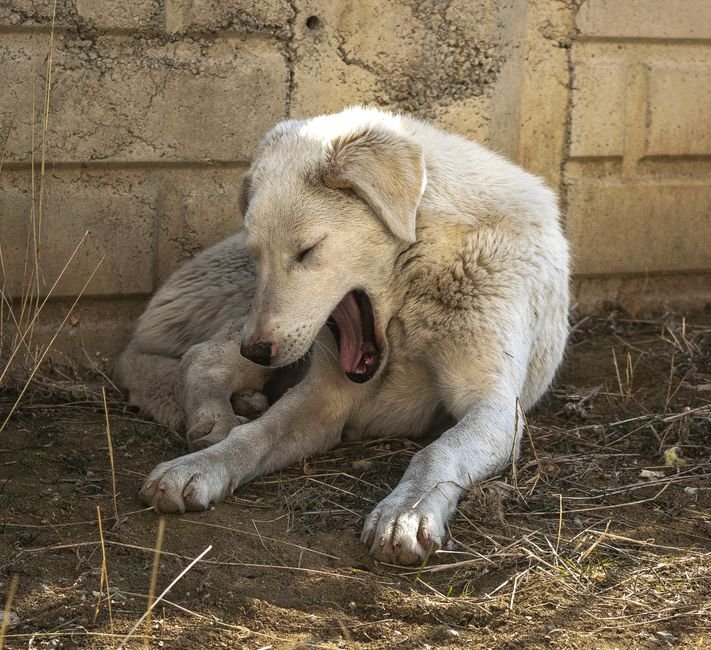
A dog’s yawn means different things depending on the moment it happens in. Right after your dog wakes up from a nap, a big open-mouth yawn is exactly what it looks like — a sign of drowsiness. But that same yawn showing up during a nail trim, a vet exam, or a tense moment with another dog is a stress signal, not tiredness, and treating every yawn as sleepiness means missing what your dog is telling you.
Stress Yawns Look Different From Sleepy Yawns
A sleepy yawn is slow and full, often followed by a stretch and a settling-down. A stress yawn tends to be quicker and shallower, and it rarely shows up alone. Watch for it alongside lip licking, looking away, a lowered body, or “whale eye” — the whites of the eyes showing at the corners. That combination is your dog’s way of saying a situation feels uncomfortable, well before they’d ever growl or snap.
Yawning Around Other Dogs or New People
At a dog park, a greeting, or a crowded vet waiting room, a yawn often functions as a calming signal — your dog trying to defuse tension or communicate “I’m not a threat” to whoever’s nearby. Puppies and adolescent dogs use this a lot while they’re still learning to read other dogs’ body language, and it’s worth watching for during on-leash greetings that seem to be escalating. A dog who starts yawning repeatedly during an interaction, alongside other signs that overlap with general anxiety, is often telling you it’s time to create some distance rather than push the introduction further.
Contagious Yawning Between Dogs and People
Dogs can catch a yawn from a familiar person the same way people catch them from each other — researchers studying this have found dogs yawn more after watching their own owner yawn than after watching a stranger do it. This kind of yawning seems tied to social bonding rather than stress or tiredness, and it’s considered a harmless, even mildly encouraging, sign of attachment.
When It’s Worth Paying Closer Attention
Occasional yawning in any of these contexts is normal dog behavior. What’s worth watching is a sudden increase in frequency, especially paired with panting, pacing, drooling, or other signs of discomfort covered in our guide to reading physical distress signals on a walk — a cluster of signals together is a better cue to slow down than any one behavior on its own.
For general background on canine body language, the ASPCA’s dog care resources are a reliable starting point.
Don’t Confuse Yawning With Heat Stress
Yawning is a mouth-open behavior, but it isn’t the same thing as open-mouth panting, and mixing the two up matters. A yawn is brief and closes fully between repetitions; heat-related panting is sustained, often with a wider stance and heavier breathing that doesn’t resolve after a few seconds. On a warm walk, a dog who yawns once at a stoplight is probably fine, but a dog who’s panting heavily and also yawning needs shade and water, not more distance covered.
Context is what turns a yawn from meaningless into useful information — the same open mouth means something different at nine in the morning than it does mid-tension with the dog next door.