What Makes a Scratching Post Something a Cat Will Use
A cat ignores a scratching post for one of three reasons: it’s too short, too wobbly, or covered in the wrong material. Fix those three things and most cats will use a post without any training at all.
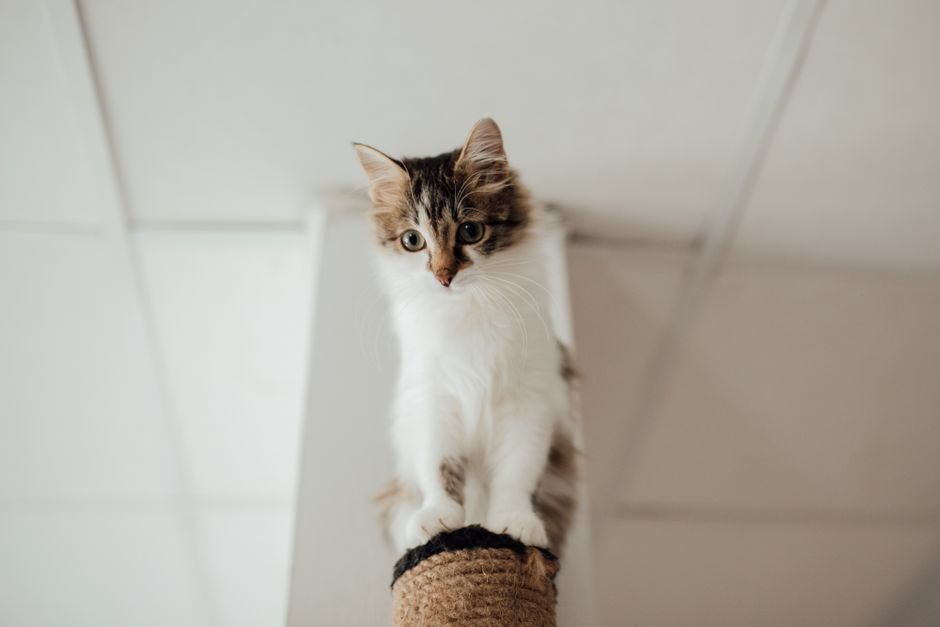
Height comes first. A cat scratches to stretch its whole body, front paws extended overhead, and a post shorter than about 30 inches doesn’t let it do that. Watch a cat that’s ignoring a short post and it’s often scratching the nearest doorframe or couch arm instead, because those give it the vertical reach the post doesn’t.
Stability matters more than most owners expect
A post that wobbles or tips when a cat digs its claws in gets abandoned after one try. Test any post yourself before buying: push down and sideways on the top. If it rocks, the base is too light or too narrow relative to the height. A heavy, wide base is worth paying more for than a taller post on a flimsy stand.
Material is the third variable, and it’s the one owners get wrong most often. Carpet-covered posts feel familiar to a shopper because they look like furniture, but many cats prefer sisal rope or plain sisal fabric, which shreds satisfyingly under claws in a way carpet doesn’t. If a cat has been scratching upholstery, a sisal-covered post placed right next to that furniture is a better first attempt than a carpeted one across the room.
Placement changes outcomes almost as much as the post itself. Cats tend to scratch after waking up and near the areas they spend the most time in, not in an isolated corner. Start the post beside a favorite sleeping spot or the furniture already being scratched, then move it gradually if the location needs to change later.
- Choose a post at least 30 inches tall, or taller for a large breed
- Press down and sideways on the top to check for wobble before buying
- Try sisal rope or sisal fabric before carpet if a cat is already ignoring a covered post
- Put it where the cat already spends time, not in a spare corner
- Offer both a vertical post and a horizontal scratcher, since some cats prefer one over the other
If a cat that used to scratch a post suddenly stops, check the post itself first. A base worn loose, fabric shredded down to the backing, or a post that’s been moved recently can all be enough to send a cat looking for a new surface. A quick look at a cat’s overall body language, the kind covered in how cats communicate through sound and posture, can also help rule out stress as the reason a cat has stopped using furniture it used to leave alone.
Declawing is not a fix for a cat that won’t use a scratching post. International Cat Care’s behavior guidance treats scratching as a normal, necessary activity rather than a problem to eliminate, and most welfare organizations consider declawing an unnecessary and painful procedure now that so many alternatives exist. A post that fits a cat’s real habits solves the problem without surgery.
If a household has more than one cat, each one may have a different preference, and a single shared post is often not enough. That’s less about behavior and more about resources: multiple cats generally need multiple scratching options in different rooms, the same way they need separate spaces to retreat to when they’re stressed.
Buy a plain sisal post, put it where the cat already is, and give it a week before deciding it doesn’t work.