What Makes a Dog Actually Comfortable Wearing a Muzzle for a Vet Visit
Dogs get comfortable in a muzzle when they learn, through lots of short and rewarding practice at home, that the muzzle predicts good things. Done well, it stops being a sign that something scary is coming and becomes just another piece of gear, like a harness.
That matters because a muzzle first seen in an exam room, put on in a hurry while your dog is already stressed, makes every later visit harder. Dog muzzle training for vet visits works best when it starts weeks before you need it, and it’s worthwhile even for dogs who have never bitten anyone, since any dog in pain can snap.
Choosing a muzzle your dog can live in
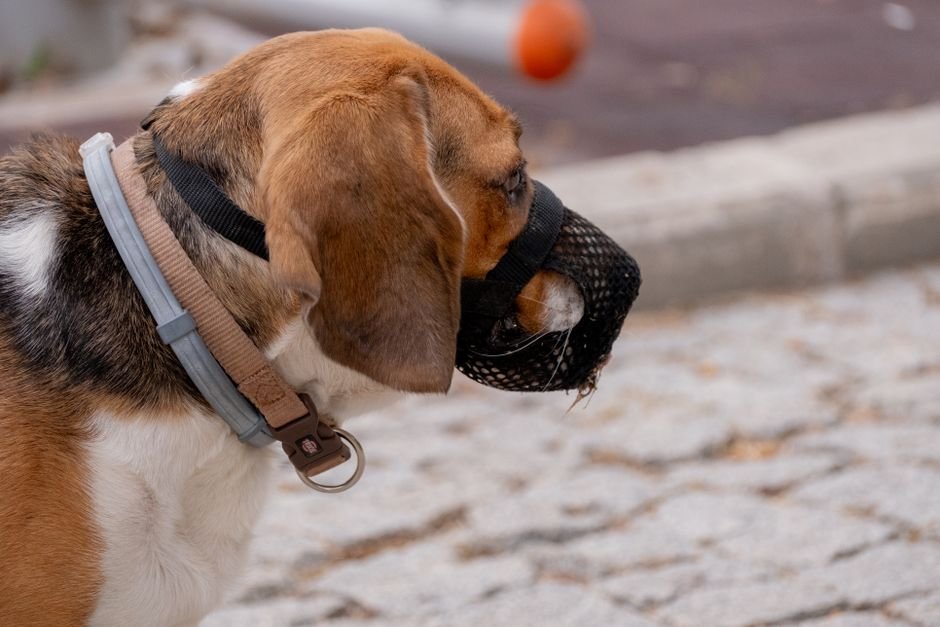
A basket muzzle lets a dog pant, drink, and take food rewards, which is exactly what training needs. Look for one long enough that it doesn’t press on the nose and roomy enough that your dog can open their mouth fully to pant. Fabric sleeve muzzles that hold the mouth closed are meant for very brief handling only; they aren’t suitable for training or a long wait, because a dog that can’t pant can overheat.
Your vet team can usually help with sizing if you’re unsure.
Dog muzzle training for vet visits, step by step
This is ordinary positive reinforcement training applied to one object. Keep sessions to a few minutes, use food your dog loves, and stop while they’re still keen. Only move on when your dog is relaxed and eager at the current step.
- Show the muzzle, reward, and put it away. Repeat until your dog brightens when it appears.
- Hold the muzzle with a reward at the front of the basket so your dog chooses to push their nose in.
- Gradually ask for a longer nose-in before the reward arrives.
- Fasten the strap for a second, feed through the basket, then unclip. Build the time up slowly.
- Pair wearing it with everyday good things: a short walk, a sniffing game, the minutes before dinner.
- Practice gentle handling while it’s on, like touching paws and ears, or stepping onto a bathroom scale.
Signs you’re moving too fast
Pawing at the muzzle, rubbing the face on the floor, freezing, turning away, lip-licking, or whale eye (the whites of the eyes showing) all mean go back a step. The signals described in a dog’s warning signs before a bite are the same ones to watch for here.
Never force the muzzle on during practice, and never use it as a punishment. Either one teaches your dog the muzzle means trouble, which undoes the work.
On the day
Bring the muzzle and plenty of favorite rewards, and put it on in the car park or a quiet corner before stress builds, not in the exam room. Tell the staff your dog is muzzle trained; many clinics welcome it, because it lets them work calmly and gently. Clinics that use low-stress handling approaches often have extra suggestions, and Fear Free Happy Homes has owner resources on preparing a pet for vet visits.
Keep it in the routine
Pull the muzzle out for a minute or two every week or so, even when no appointment is coming up. A muzzle that only appears before vet visits soon becomes a predictor of vet visits.
A muzzle isn’t a label that your dog is dangerous. It’s closer to a seatbelt: dull, sensible, and best put on before anything happens.